World
• Analysis
Trump Ukraine Peace Still Distant, Says Former UK Ambassador Gould-Davies
Peace in Ukraine remains far off because Russia has no interest in ending the war, according to Nigel Gould-Davies, former UK ambassador to Belarus, who calls Donald Trump's announced energy ceasefire a product of fantasy that neither Moscow nor Kyiv knew about.
By Haut Monde Post
• October 15, 2026
• 5 Min Read
Nigel Gould-Davies, a career diplomat and former UK ambassador to Belarus who was previously head of economics at the Foreign Office in Moscow, is now senior fellow for Russia and Eurasia at the International Institute for Strategic Studies. His verdict on the prospects for trump ukraine peace is blunt: the talks have never been real, and one side openly does not want them to succeed.
Talks that were never negotiations
Rounds of talks since Russia's 2022 full-scale invasion - in Belarus, Turkey, Abu Dhabi and Geneva - have all failed to produce a ceasefire or peace deal. In Gould-Davies's view, that is no accident. A peace agreement, he argues, is only possible when both sides see more advantage in stopping the fighting than in continuing it.
"The problem with this situation is that Russia has no interest in ending the war," he says.
The sessions held since Donald Trump's return to the White House, he argues, were not genuine bargaining at all. "They have not really been negotiations," but "parallel efforts by Russia and Ukraine to persuade the White House it's the other side's fault".
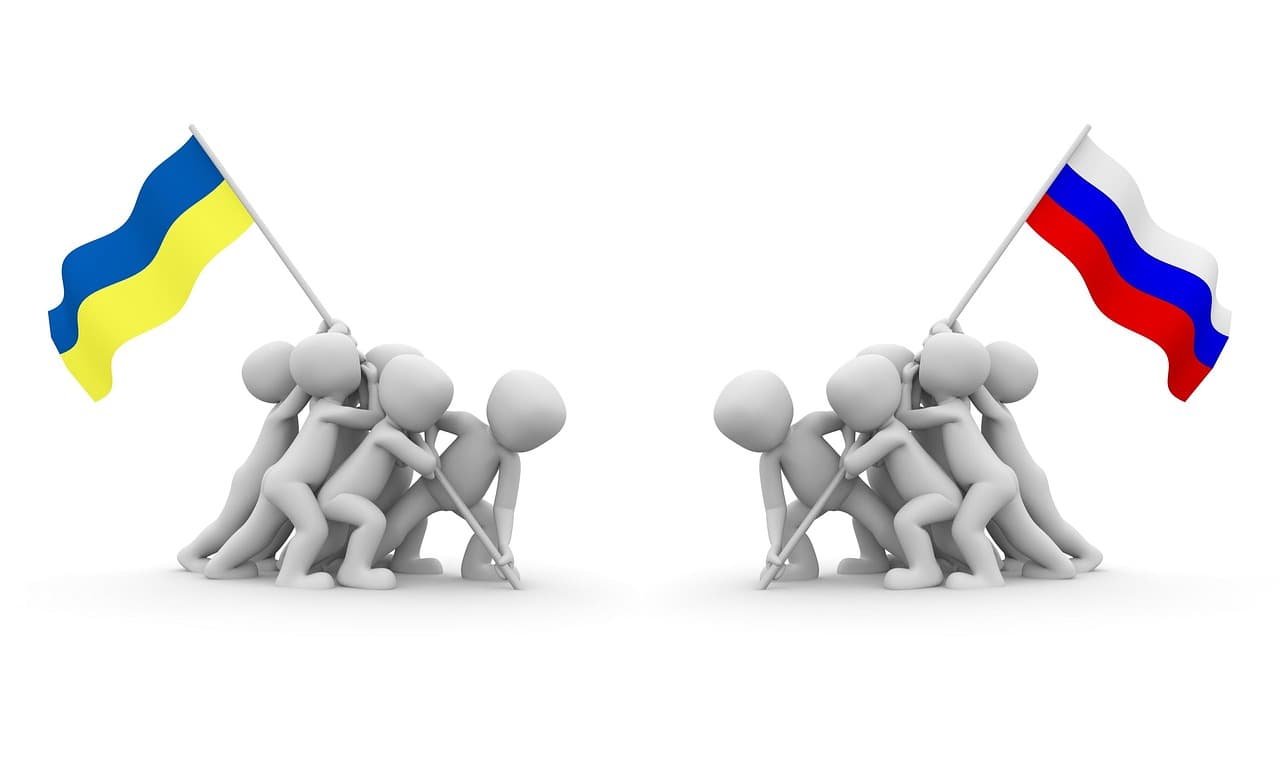
Ukraine, for its part, has time and again said it is willing to accept an unconditional ceasefire. "Russia, by contrast, has repeatedly said publicly that it is not interested in a ceasefire," says Gould-Davies. In Russian terms, a full end to the war means "decisive superiority and dominance over a severely weakened Ukraine".
A ceasefire announced by one side only
Against that backdrop came Trump's announcement on Sunday via Truth Social of an "ENERGY CEASEFIRE in the War between Russia and Ukraine", apparently without checking with either side. Volodymyr Zelenskyy said any such deal was "news to me", but declared Ukraine was "ready and we will accept it". Vladimir Putin responded by blowing up some Ukrainian power plants.
Gould-Davies says the initiative had "no basis whatsoever in reality" - neither Moscow nor Kyiv was aware of it. Of the ceasefire announcement itself, he says Trump "simply made it up … a product of a fantasy".
A White House tilting towards Moscow
Gould-Davies sees a pattern in Trump's conduct of the war file. "[Trump's] natural centre of gravity is to favour Russia," he says, citing weapons supply restrictions and past pauses in intelligence-sharing. He argues Trump's theory of ending the war involves concessions to Russia and coercion of Ukraine. The picture is not one-sided: Trump has at times sided with Ukraine, sanctioning Russian oil companies and helping Ukraine target Russian energy infrastructure.
Recent events have fed the concern:
- •Zelenskyy yesterday accused Trump of restricting Ukrainian access to "military-grade" Starlink services, hampering drone strike missions and air defences.
- •This week Trump announced a plan to import Russian diesel in the hope of bringing down pump prices, dismaying European leaders and a bipartisan group of US senators.
- •There are suggestions the imports could be illegal under US law, and the quantities being discussed are seemingly too small to actually affect prices ahead of next month's midterms.
Some diplomatic circles, Gould-Davies says, worry the diesel deal "is only the visible tip of the iceberg" of a private pro-Russia tilt inside the White House.
He suspects Trump may be seeking to get Iran to ease the blockade on the strait of Hormuz via Russia, to lower fuel prices before the midterms. Putin's quid pro quo "could be an easing of America's sanctions on Russia and an ending to America's support for Ukraine". It is just a theory, he caveats, "but join the dots and it logically makes sense".
Kremlinology inside the White House
European diplomacy has adapted by following the action. Leaders and diplomats descend on Washington when Trump's veered too far off course; US, UK and European diplomats most recently met in Miami at the end of last week. Gould-Davies says this engagement has averted "the nightmare scenario" of Trump binning off America's old transatlantic partners for good.
He describes the challenge as having "a non-standard president" in the White House. "Right now even 'the White House' is an abstraction," he says, because it consists of many players who privately hold different views from the president. Take John Ratcliffe, director of the CIA, who visited Moscow this summer amid reliable speculation that he aimed to warn Russia against escalation into Europe. "There are people in positions of power and influence still in this administration who understand the problem of Russia in the right way".
Western diplomats, Gould-Davies says, practise a kind of White House Kremlinology: "trying to understand the different views and moods of those around Trump and who will be the last person to whisper in his ear".
But he warns that secret back-channel diplomacy carries its own risk - "a degree of collective delusion". There is "literally no evidence for that whatsoever" that Russia can be persuaded to change course, he says, and informal discussions may be "actively unhelpful, because they perpetuate the illusion that peace may be around the corner".
Ukraine has repeatedly said it will accept an unconditional ceasefire. For Gould-Davies, the obstacle remains the one he names: Russia says publicly that it has no interest in a ceasefire.