Thursday, October 15, 2026

english

HAUT MONDE

POST

World

• Analysis

Poland economy: from martial law queues to the EU's tallest tower

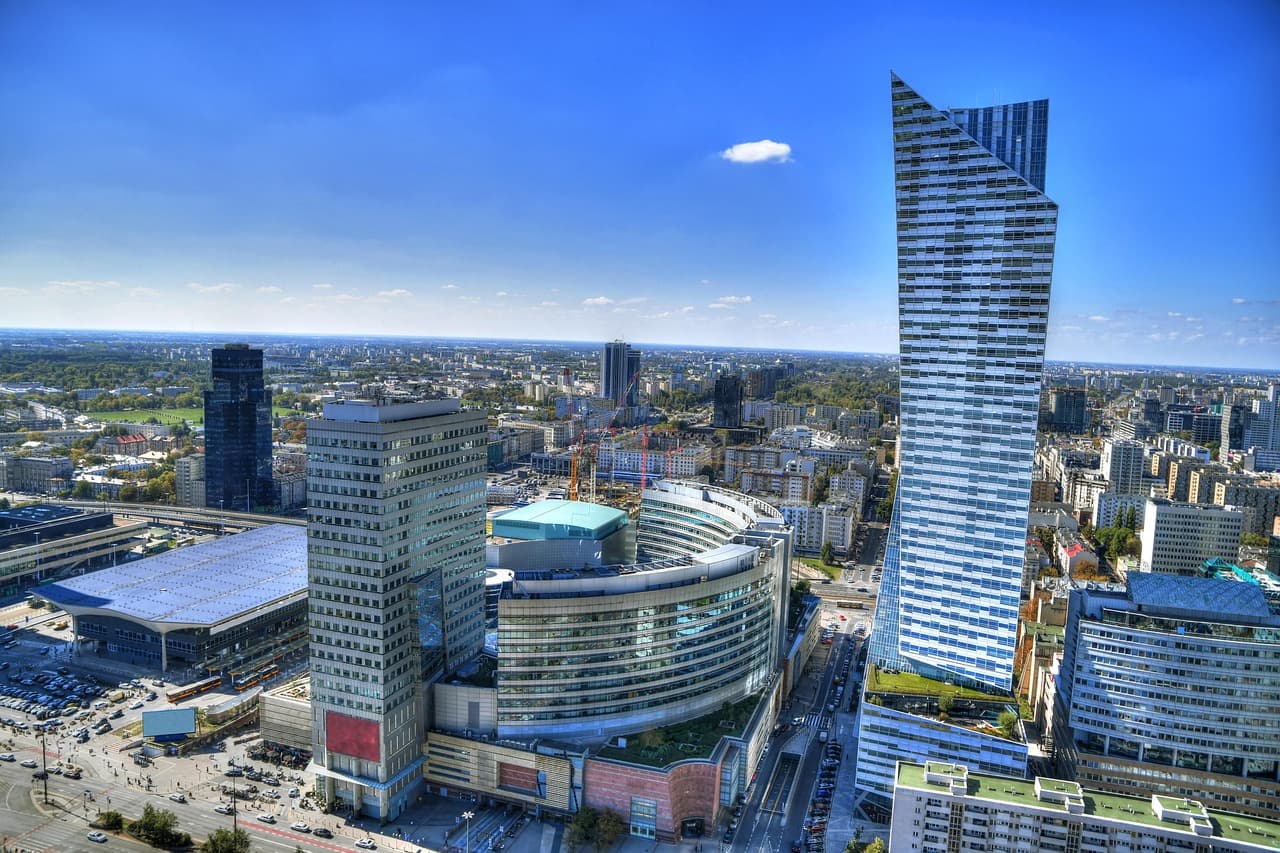
Poland's economy has grown from 40% of the EU average income in the mid-1990s to 81% last year, passing $1tn (£755bn) in national income and ranking among the world's 20 largest economies. In Warsaw, the 310m Varso tower - the EU's tallest - now looks down on the Palace of Culture built in the Soviet era.

By Haut Monde Post

• October 15, 2026

• 5 Min Read
Poland economy: from martial law queues to the EU's tallest tower

A tower taller than the Palace of Culture

From the top of the Varso tower, the view over Warsaw takes in the building that once defined the city's skyline: the Palace of Culture and Science, a gift from the Soviet era that Poles lived beneath for decades. The Varso, completed four years ago with its 310m-high spire, is now the tallest building in the EU, and it stands above the palace in more than one sense.

"We look down on it," says Cezary Błaszczyk, the managing director of HB Reavis in Poland, which owns the Varso. For him the height gap carries a message about where the country stands now: since the tower is taller than the palace, he said, "We got over communism, and now we are a country with a strong economy."

A few months ago a slackline walker traversed the 500m gap between the two buildings. "It was a symbolic walk from the past to the future," says Błaszczyk's colleague Natalia Kasperska.

The fastest income convergence in the world

The numbers behind the skyline are stark. Excluding oil-exporting states and financial hubs, no country has converged with western income levels faster than Poland: average incomes rose from 40% of the EU average in the mid-1990s to 81% last year. National income surpassed $1tn (£755bn) last year, ranking Poland among the world's 20 largest economies, and IMF projections show income per capita will soon overtake Japan and Spain.

  • •Average Polish labour costs stand at €19.10 (£16.10) an hour - still half the level of Germany and France, but the gap is closing
  • •The average monthly wage has more than tripled in nominal terms since 2004, reaching 8,904 złoty (£1,723) last year
  • •Warsaw's net monthly salary has risen by 120% since 2016, according to Deutsche Bank, lifting it above Rome and Lisbon
  • •A meal for two in the capital now costs more than in Tokyo, and the price of a cappuccino has doubled

Growth has not been shared evenly. Income inequality is among the highest in Europe, and rising living costs driven by global capital are squeezing out poorer Varsovians.

From leaving to returning

For years the story was emigration. Since 2021, when Brexit was enacted after a year-long transition period, twice as many Poles have left the UK as arrived in every year. The flow has reversed elsewhere too: in 2024, Germany recorded more non-Germans moving to Poland than heading in the opposite direction for the first time on record.

Among the returnees are Jedrzej Kolesinski and Krzysztof Gornicki of Foster + Partners' Warsaw practice, based on the Varso's 44th floor. Both moved to London in their 20s to work in the British firm's head office and went on to lead the design team behind the tower itself. They are now designing Warsaw's new airport - described as the biggest greenfield infrastructure project in Europe.

Gornicki says the move home has not narrowed his workload: "You can work globally from one location. In London we worked on projects from North America to Asia … right now, we're doing the same thing, just from Warsaw."

A tech hub without an inferiority complex

A $1bn fund of public and private capital now backs the drive to build a regional poland tech hub, supporting startups and AI companies. Among the high-growth names is ElevenLabs, an $11bn AI audio generation and voice cloning company named after 11 November, Poland's national independence day. The games studio CD Projekt Red - developer of The Witcher and Cyberpunk 2077 - began in the 1990s as an importer of CD games made by US publishers and is based in the Praga district east of the Vistula.

The education system feeds the pipeline. OECD Pisa scores rank Poland equal to the UK among the top countries in Europe and globally for maths, and a greater share of Polish adults hold higher education qualifications than in Germany.

Michał Nowakowski, CD Projekt Red's co-chief executive, remembers a different mood in the industry's early years: "In the late 90s and early 2000s I feel there was a massive inferiority complex. Among everybody who was young, you wanted to catch up with the west." That, he says, is gone. "They don't stop and think: 'Can we be as good as Brits, French, Spanish?' It's not holding them back."

Nowakowski describes Poland today as a country of the right size - neither too small nor too big - where the old inferiority complex has faded and, in his view, nothing holds its people back any more.

The InPost founder Rafał Brzoska sees the easy phase of catching up as over. "We don't have labour cost advantage at all. We need to focus on productivity, technology, cheaper energy and better regulation," he said.

He cautioned against hoping for a shortcut: "there is no magic remedy. We need to be super careful in terms of believing there is a secret sauce that will magically change things." And, he added, "In my opinion – unfortunately for all of us – we still need to work hard."

Politics and the next step

The growth story sits alongside political strain. Divisions between the nationalist president, Karol Nawrocki, and Donald Tusk's liberal government have grown increasingly acrimonious, while fringe far-right parties together hold a fifth of public support ahead of a general election next year.

Economically, Poland is investing heavily in defence and energy security - aiming to boost economic growth in the process - as Europe responds to Russian aggression and US disengagement.

Back in the centre of Warsaw, the old Parade Square around the palace, once designed for Soviet tank columns, has been greened, with further development planned to bolster Warsaw's bid for the 2040 summer Olympics.
Thursday, Oct 15, 2026

english

World

• Analysis

Poland economy: from martial law queues to the EU's tallest tower

Poland's economy has grown from 40% of the EU average income in the mid-1990s to 81% last year, passing $1tn (£755bn) in national income and ranking among the world's 20 largest economies. In Warsaw, the 310m Varso tower - the EU's tallest - now looks down on the Palace of Culture built in the Soviet era.

By Haut Monde Post

Oct 15, 2026 • 5 Min Read

Poland economy: from martial law queues to the EU's tallest tower

A tower taller than the Palace of Culture

From the top of the Varso tower, the view over Warsaw takes in the building that once defined the city's skyline: the Palace of Culture and Science, a gift from the Soviet era that Poles lived beneath for decades. The Varso, completed four years ago with its 310m-high spire, is now the tallest building in the EU, and it stands above the palace in more than one sense.

"We look down on it," says Cezary Błaszczyk, the managing director of HB Reavis in Poland, which owns the Varso. For him the height gap carries a message about where the country stands now: since the tower is taller than the palace, he said, "We got over communism, and now we are a country with a strong economy."

A few months ago a slackline walker traversed the 500m gap between the two buildings. "It was a symbolic walk from the past to the future," says Błaszczyk's colleague Natalia Kasperska.

The fastest income convergence in the world

The numbers behind the skyline are stark. Excluding oil-exporting states and financial hubs, no country has converged with western income levels faster than Poland: average incomes rose from 40% of the EU average in the mid-1990s to 81% last year. National income surpassed $1tn (£755bn) last year, ranking Poland among the world's 20 largest economies, and IMF projections show income per capita will soon overtake Japan and Spain.

  • •Average Polish labour costs stand at €19.10 (£16.10) an hour - still half the level of Germany and France, but the gap is closing
  • •The average monthly wage has more than tripled in nominal terms since 2004, reaching 8,904 złoty (£1,723) last year
  • •Warsaw's net monthly salary has risen by 120% since 2016, according to Deutsche Bank, lifting it above Rome and Lisbon
  • •A meal for two in the capital now costs more than in Tokyo, and the price of a cappuccino has doubled

Growth has not been shared evenly. Income inequality is among the highest in Europe, and rising living costs driven by global capital are squeezing out poorer Varsovians.

From leaving to returning

For years the story was emigration. Since 2021, when Brexit was enacted after a year-long transition period, twice as many Poles have left the UK as arrived in every year. The flow has reversed elsewhere too: in 2024, Germany recorded more non-Germans moving to Poland than heading in the opposite direction for the first time on record.

Among the returnees are Jedrzej Kolesinski and Krzysztof Gornicki of Foster + Partners' Warsaw practice, based on the Varso's 44th floor. Both moved to London in their 20s to work in the British firm's head office and went on to lead the design team behind the tower itself. They are now designing Warsaw's new airport - described as the biggest greenfield infrastructure project in Europe.

Gornicki says the move home has not narrowed his workload: "You can work globally from one location. In London we worked on projects from North America to Asia … right now, we're doing the same thing, just from Warsaw."

A tech hub without an inferiority complex

A $1bn fund of public and private capital now backs the drive to build a regional poland tech hub, supporting startups and AI companies. Among the high-growth names is ElevenLabs, an $11bn AI audio generation and voice cloning company named after 11 November, Poland's national independence day. The games studio CD Projekt Red - developer of The Witcher and Cyberpunk 2077 - began in the 1990s as an importer of CD games made by US publishers and is based in the Praga district east of the Vistula.

The education system feeds the pipeline. OECD Pisa scores rank Poland equal to the UK among the top countries in Europe and globally for maths, and a greater share of Polish adults hold higher education qualifications than in Germany.

Michał Nowakowski, CD Projekt Red's co-chief executive, remembers a different mood in the industry's early years: "In the late 90s and early 2000s I feel there was a massive inferiority complex. Among everybody who was young, you wanted to catch up with the west." That, he says, is gone. "They don't stop and think: 'Can we be as good as Brits, French, Spanish?' It's not holding them back."

Nowakowski describes Poland today as a country of the right size - neither too small nor too big - where the old inferiority complex has faded and, in his view, nothing holds its people back any more.

The InPost founder Rafał Brzoska sees the easy phase of catching up as over. "We don't have labour cost advantage at all. We need to focus on productivity, technology, cheaper energy and better regulation," he said.

He cautioned against hoping for a shortcut: "there is no magic remedy. We need to be super careful in terms of believing there is a secret sauce that will magically change things." And, he added, "In my opinion – unfortunately for all of us – we still need to work hard."

Politics and the next step

The growth story sits alongside political strain. Divisions between the nationalist president, Karol Nawrocki, and Donald Tusk's liberal government have grown increasingly acrimonious, while fringe far-right parties together hold a fifth of public support ahead of a general election next year.

Economically, Poland is investing heavily in defence and energy security - aiming to boost economic growth in the process - as Europe responds to Russian aggression and US disengagement.

Back in the centre of Warsaw, the old Parade Square around the palace, once designed for Soviet tank columns, has been greened, with further development planned to bolster Warsaw's bid for the 2040 summer Olympics.

Thursday, Oct 15, 2026

english

World

• Analysis

Poland economy: from martial law queues to the EU's tallest tower

Poland's economy has grown from 40% of the EU average income in the mid-1990s to 81% last year, passing $1tn (£755bn) in national income and ranking among the world's 20 largest economies. In Warsaw, the 310m Varso tower - the EU's tallest - now looks down on the Palace of Culture built in the Soviet era.

By Haut Monde Post

Oct 15, 2026 • 5 Min Read

Poland economy: from martial law queues to the EU's tallest tower

A tower taller than the Palace of Culture

From the top of the Varso tower, the view over Warsaw takes in the building that once defined the city's skyline: the Palace of Culture and Science, a gift from the Soviet era that Poles lived beneath for decades. The Varso, completed four years ago with its 310m-high spire, is now the tallest building in the EU, and it stands above the palace in more than one sense.

"We look down on it," says Cezary Błaszczyk, the managing director of HB Reavis in Poland, which owns the Varso. For him the height gap carries a message about where the country stands now: since the tower is taller than the palace, he said, "We got over communism, and now we are a country with a strong economy."

A few months ago a slackline walker traversed the 500m gap between the two buildings. "It was a symbolic walk from the past to the future," says Błaszczyk's colleague Natalia Kasperska.

The fastest income convergence in the world

The numbers behind the skyline are stark. Excluding oil-exporting states and financial hubs, no country has converged with western income levels faster than Poland: average incomes rose from 40% of the EU average in the mid-1990s to 81% last year. National income surpassed $1tn (£755bn) last year, ranking Poland among the world's 20 largest economies, and IMF projections show income per capita will soon overtake Japan and Spain.

  • •Average Polish labour costs stand at €19.10 (£16.10) an hour - still half the level of Germany and France, but the gap is closing
  • •The average monthly wage has more than tripled in nominal terms since 2004, reaching 8,904 złoty (£1,723) last year
  • •Warsaw's net monthly salary has risen by 120% since 2016, according to Deutsche Bank, lifting it above Rome and Lisbon
  • •A meal for two in the capital now costs more than in Tokyo, and the price of a cappuccino has doubled

Growth has not been shared evenly. Income inequality is among the highest in Europe, and rising living costs driven by global capital are squeezing out poorer Varsovians.

From leaving to returning

For years the story was emigration. Since 2021, when Brexit was enacted after a year-long transition period, twice as many Poles have left the UK as arrived in every year. The flow has reversed elsewhere too: in 2024, Germany recorded more non-Germans moving to Poland than heading in the opposite direction for the first time on record.

Among the returnees are Jedrzej Kolesinski and Krzysztof Gornicki of Foster + Partners' Warsaw practice, based on the Varso's 44th floor. Both moved to London in their 20s to work in the British firm's head office and went on to lead the design team behind the tower itself. They are now designing Warsaw's new airport - described as the biggest greenfield infrastructure project in Europe.

Gornicki says the move home has not narrowed his workload: "You can work globally from one location. In London we worked on projects from North America to Asia … right now, we're doing the same thing, just from Warsaw."

A tech hub without an inferiority complex

A $1bn fund of public and private capital now backs the drive to build a regional poland tech hub, supporting startups and AI companies. Among the high-growth names is ElevenLabs, an $11bn AI audio generation and voice cloning company named after 11 November, Poland's national independence day. The games studio CD Projekt Red - developer of The Witcher and Cyberpunk 2077 - began in the 1990s as an importer of CD games made by US publishers and is based in the Praga district east of the Vistula.

The education system feeds the pipeline. OECD Pisa scores rank Poland equal to the UK among the top countries in Europe and globally for maths, and a greater share of Polish adults hold higher education qualifications than in Germany.

Michał Nowakowski, CD Projekt Red's co-chief executive, remembers a different mood in the industry's early years: "In the late 90s and early 2000s I feel there was a massive inferiority complex. Among everybody who was young, you wanted to catch up with the west." That, he says, is gone. "They don't stop and think: 'Can we be as good as Brits, French, Spanish?' It's not holding them back."

Nowakowski describes Poland today as a country of the right size - neither too small nor too big - where the old inferiority complex has faded and, in his view, nothing holds its people back any more.

The InPost founder Rafał Brzoska sees the easy phase of catching up as over. "We don't have labour cost advantage at all. We need to focus on productivity, technology, cheaper energy and better regulation," he said.

He cautioned against hoping for a shortcut: "there is no magic remedy. We need to be super careful in terms of believing there is a secret sauce that will magically change things." And, he added, "In my opinion – unfortunately for all of us – we still need to work hard."

Politics and the next step

The growth story sits alongside political strain. Divisions between the nationalist president, Karol Nawrocki, and Donald Tusk's liberal government have grown increasingly acrimonious, while fringe far-right parties together hold a fifth of public support ahead of a general election next year.

Economically, Poland is investing heavily in defence and energy security - aiming to boost economic growth in the process - as Europe responds to Russian aggression and US disengagement.

Back in the centre of Warsaw, the old Parade Square around the palace, once designed for Soviet tank columns, has been greened, with further development planned to bolster Warsaw's bid for the 2040 summer Olympics.