Culture & Arts
• Analysis
Roman sarcophagus at Westminster Abbey likely held a medieval abbot, expert says
Prof Warwick Rodwell, consultant archaeologist at Westminster Abbey, says the Roman sarcophagus unearthed there most likely contained the remains of a medieval abbot, after radiocarbon dating placed the bones in the late 10th or early 11th century.
By Haut Monde Post
• October 21, 2026
• 3 Min Read
A Roman coffin found in 1820
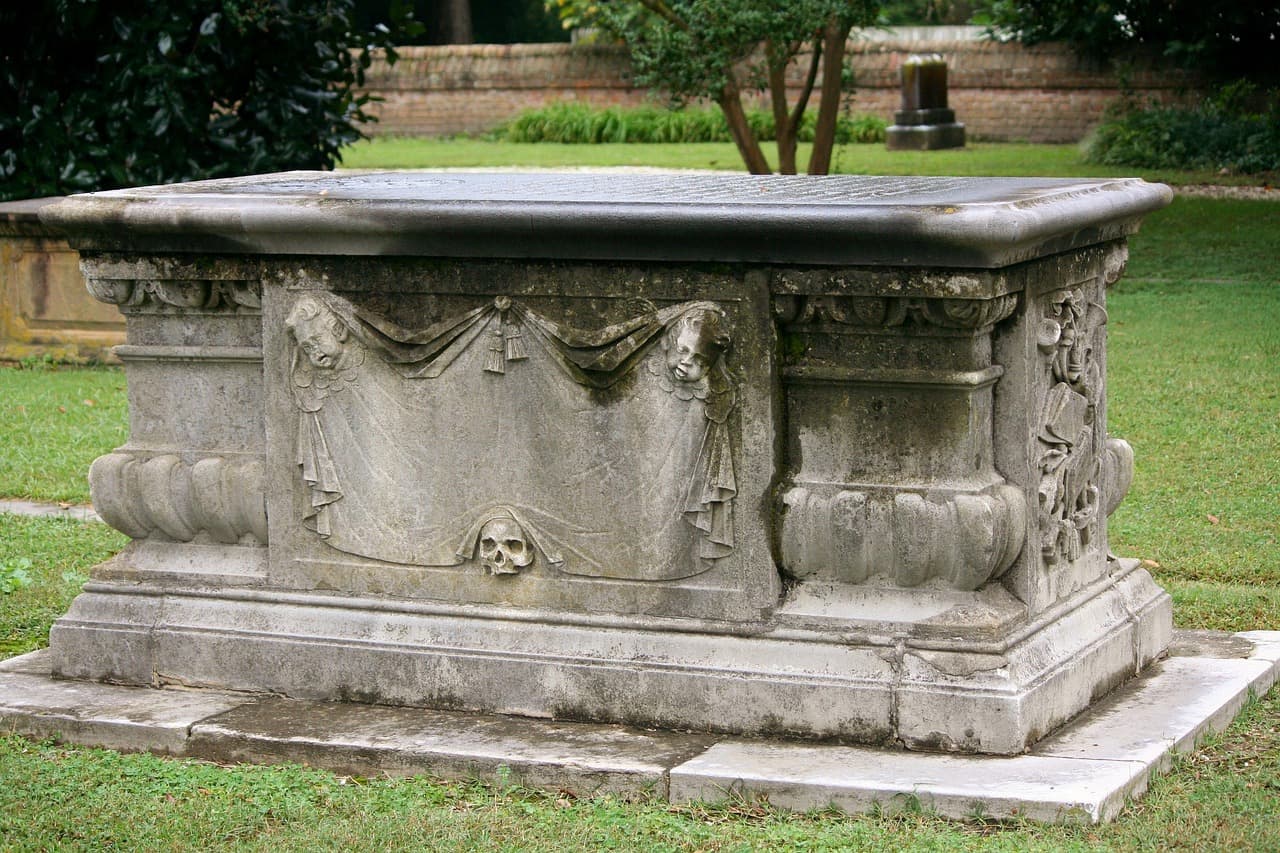
The story of the Westminster Abbey sarcophagus begins nearly two centuries ago. First spotted in 1820, the limestone coffin was officially excavated in 1869 from ground that is now grass on the north side of the nave, once the yard of a sacristy built under Henry III.
- •The sarcophagus dates from the late Roman period and carries a Latin inscription to Valerius Amandinus, with Roman decoration on one side.
- •No Roman artefacts turned up in later excavations of the surrounding area.
- •Rodwell said the coffin was not in its original place of burial and was probably housed in the wall recess of a mausoleum; Valerius Amandinus was probably a man of wealth.
The skeleton found in 2018
The 2018 investigation was carried out ahead of displaying the sarcophagus in the Queen's Diamond Jubilee Galleries, and as part of that work the coffin was taken to a laboratory and its lid removed. Researchers had assumed any skeleton inside was long lost, yet the bones that emerged matched 19th-century drawings of the find.
"And there, inside it, was the skeleton," Rodwell said.
Analysis showed the remains were those of a man 5ft 9in tall, aged between 35 and 49. Cleaning the interior revealed a rectangular outline in a white substance, indicating the body had been covered in powdered lime before being placed in a wooden coffin set inside the sarcophagus.
Dating points to an abbot
Radiocarbon dating of the bones placed them in the late 10th or early 11th century, far later than the Roman coffin itself. The fourth-century lid had also been modified with a large carved cross running its full length and width, a specific late Anglo-Saxon cross type.
The container itself, Rodwell argued, settles the question of status: no one of humbler standing, he said, could have expected a burial of that kind, and the Latin cross points to a major ecclesiastic. He concluded the man was most likely a medieval abbot.
Ælfwig or Wulfnoth?
Two abbots fit the dating: Ælfwig, who died in about 1020, and Wulfnoth, who died in about 1049. Rodwell favours Ælfwig, an existing Westminster monk who served about 27 years as abbot.
He also suggested a burial history for the re-used sarcophagus: it was most likely first interred in the eastern arm of the abbey church, with the lid serving as a floor slab, then dug up and reburied during Henry III's building works.
Published findings
Rodwell's findings are published in the Journal of the British Archaeological Association, covering both the 2018 investigation and the later dating work. He also cautioned that the full story of a discovery like this is rarely visible straight away, noting that archaeology involves more complexity than first meets the eye.