Friday, October 16, 2026

english

HAUT MONDE

POST

World

• Analysis

Yellow Vests return France: October 17 protests set over fuel prices and student unrest

Veterans of France's Yellow Vest movement are backing nationwide demonstrations on October 17 called against rising fuel prices, in support of high-school students who have protested classroom conditions for nearly a month.

By Haut Monde Post

• October 16, 2026

• 4 Min Read
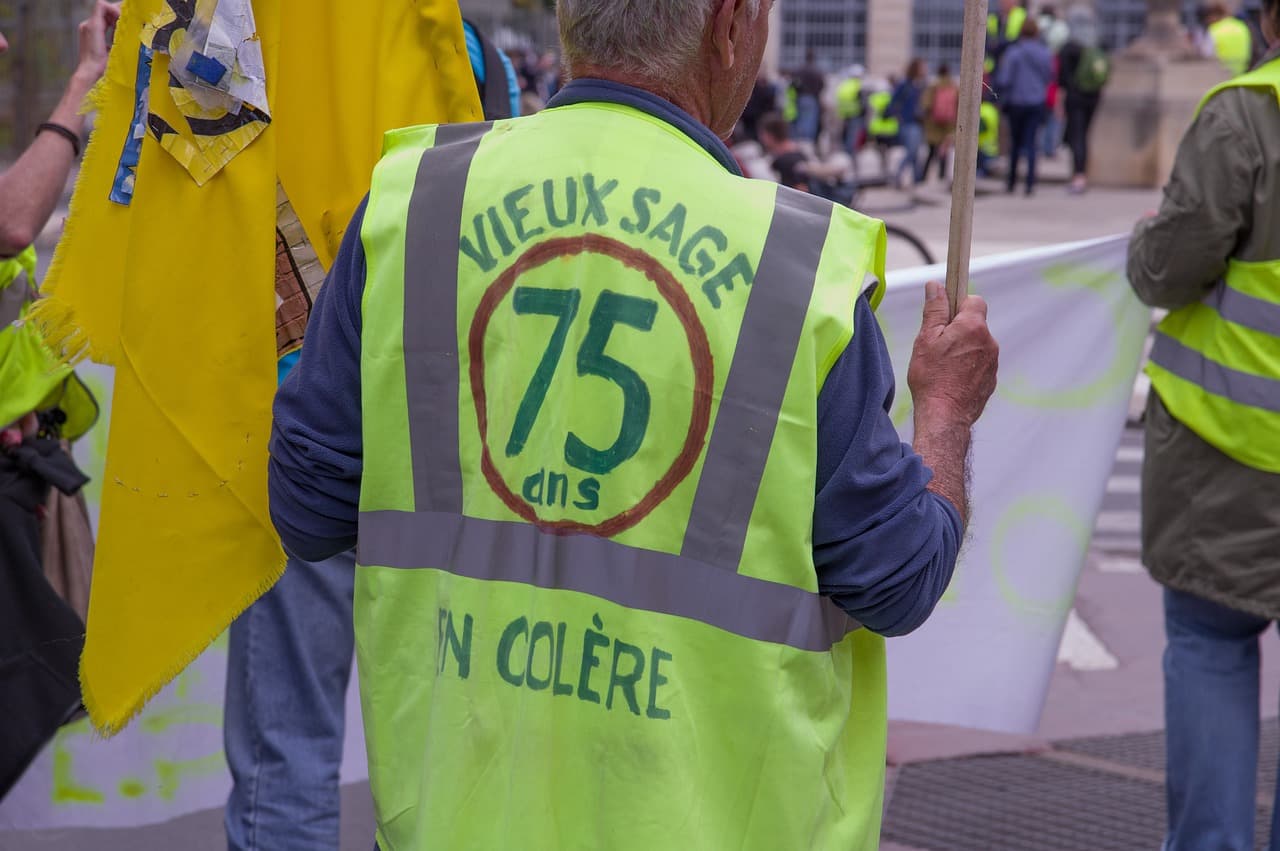
Yellow Vests return France: October 17 protests set over fuel prices and student unrest

How the October 17 call began

The call for nationwide demonstrations on October 17 against rising fuel prices in France began far from the roundabouts of the original movement. It took off with a viral TikTok video posted by a young man frustrated by rising prices at the pump, and was later backed by Communist Party leader Fabien Roussel and Green leader Marine Tondelier. Former Yellow Vest figures have since joined in support of the high-school student protests, which have run for nearly a month over classroom conditions.

The scale of what is planned was mapped out on a dedicated site:

  • •A map published Thursday on 17octobregiletjaune.net listed more than 1,000 events planned around the country.
  • •The demonstrations are aimed at fuel prices and at supporting the students.

Yellow Vest figures rejoin the streets

The return of familiar names has given the call its reach. Maxime 'Fly Rider' Nicolle was initially wary of the protests but announced he would travel to Paris to demonstrate after changing his mind. François Boulo said prominent figures did not plan together, telling the press: "We didn't coordinate beforehand with other prominent figures to call for protests but we all had the same reaction when we saw the police violence."

Jérôme Rodrigues, who lost an eye to a rubber-ball grenade in 2019, said no Yellow Vest was behind the October 17 protests and that the label has become almost a brand. He argued the demands have become more pressing because the situation is even more serious than it was back then, and said the movement's unfinished business still drives him.

"we still carry the frustration of not having finished the fight. Perhaps we were waiting for a new wave of popular mobilisation"

That quote from Rodrigues captures the hope for a resurgence that could, in his view, finish what the movement started. Sophie Tissier, who first registered Yellow Vest demonstrations with the Paris police prefecture in 2018, registered a Saturday demonstration on the Champs-Élysées, as she did at the height of the protests. She cited exhaustion, the dismantling of public services, falling living standards and disgust with a scandal-ridden political class, and recalled the movement's demand for greater participatory democracy through a citizens' initiative referendum, known in France as the RIC.

The shadow of 2018-2019 and police violence

The Yellow Vest movement began in 2018 with widespread protests over rising fuel prices before growing into a broader revolt against economic inequality - the cost-of-living protests that rattled President Emmanuel Macron's first term. Its name comes from the fluorescent yellow vests French drivers must carry.

That period left a heavy record. Nearly two dozen people lost an eye during 2018-2019, mostly hit by police rubber bullets. Over a single year, the injured counted 2,500 protesters and 1,800 police officers. The way French police handle crowds was condemned by, among others, the United Nations, and the student protests have put those methods under examination again.

  • •Police have opened internal investigations into 36 claims of officer violence against protesters.
  • •The claims include four children who were allegedly "mutilated" by explosive weapons and six with "significant injuries".

Divided support and uncertain turnout

The backing behind Saturday's and October 17's events is uneven. Environmental groups and a farmers' union have called on people to join Saturday's protests, but the CGT union will take part only "wherever the conditions are met", keeping its focus on November 5, when France's main trade unions have called for strikes.

Rodrigues drew a contrast with 2018, saying: "Today, the high-school students are quite closely guided by certain political parties. So, the framework is a little more institutional." He maintained the original movement was never co-opted by political parties. Tissier, for her part, saw no real cohesion at Tuesday's demonstration and criticised attempts by the radical left, "from the Communist Party to France Unbowed", to co-opt the movement.

Turnout itself is in doubt. Priscilla Ludosky - whose 2018 petition demanding cheaper fuel drew more than 1 million signatures - is sceptical. "Here, no one is putting themselves forward behind these calls. We don't know who to follow or how large October 17 will be," she told Reporterre.

She noted the original movement had built momentum for more than six months with her petition, and that when she sent media a map of 700 gatherings announced on Facebook, it became tangible - a solidity she does not yet see in the new calls. A source close to the interior minister said around 250 protest actions could take place nationwide on Saturday.
Friday, Oct 16, 2026

english

World

• Analysis

Yellow Vests return France: October 17 protests set over fuel prices and student unrest

Veterans of France's Yellow Vest movement are backing nationwide demonstrations on October 17 called against rising fuel prices, in support of high-school students who have protested classroom conditions for nearly a month.

By Haut Monde Post

Oct 16, 2026 • 4 Min Read

Yellow Vests return France: October 17 protests set over fuel prices and student unrest

How the October 17 call began

The call for nationwide demonstrations on October 17 against rising fuel prices in France began far from the roundabouts of the original movement. It took off with a viral TikTok video posted by a young man frustrated by rising prices at the pump, and was later backed by Communist Party leader Fabien Roussel and Green leader Marine Tondelier. Former Yellow Vest figures have since joined in support of the high-school student protests, which have run for nearly a month over classroom conditions.

The scale of what is planned was mapped out on a dedicated site:

  • •A map published Thursday on 17octobregiletjaune.net listed more than 1,000 events planned around the country.
  • •The demonstrations are aimed at fuel prices and at supporting the students.

Yellow Vest figures rejoin the streets

The return of familiar names has given the call its reach. Maxime 'Fly Rider' Nicolle was initially wary of the protests but announced he would travel to Paris to demonstrate after changing his mind. François Boulo said prominent figures did not plan together, telling the press: "We didn't coordinate beforehand with other prominent figures to call for protests but we all had the same reaction when we saw the police violence."

Jérôme Rodrigues, who lost an eye to a rubber-ball grenade in 2019, said no Yellow Vest was behind the October 17 protests and that the label has become almost a brand. He argued the demands have become more pressing because the situation is even more serious than it was back then, and said the movement's unfinished business still drives him.

"we still carry the frustration of not having finished the fight. Perhaps we were waiting for a new wave of popular mobilisation"

That quote from Rodrigues captures the hope for a resurgence that could, in his view, finish what the movement started. Sophie Tissier, who first registered Yellow Vest demonstrations with the Paris police prefecture in 2018, registered a Saturday demonstration on the Champs-Élysées, as she did at the height of the protests. She cited exhaustion, the dismantling of public services, falling living standards and disgust with a scandal-ridden political class, and recalled the movement's demand for greater participatory democracy through a citizens' initiative referendum, known in France as the RIC.

The shadow of 2018-2019 and police violence

The Yellow Vest movement began in 2018 with widespread protests over rising fuel prices before growing into a broader revolt against economic inequality - the cost-of-living protests that rattled President Emmanuel Macron's first term. Its name comes from the fluorescent yellow vests French drivers must carry.

That period left a heavy record. Nearly two dozen people lost an eye during 2018-2019, mostly hit by police rubber bullets. Over a single year, the injured counted 2,500 protesters and 1,800 police officers. The way French police handle crowds was condemned by, among others, the United Nations, and the student protests have put those methods under examination again.

  • •Police have opened internal investigations into 36 claims of officer violence against protesters.
  • •The claims include four children who were allegedly "mutilated" by explosive weapons and six with "significant injuries".

Divided support and uncertain turnout

The backing behind Saturday's and October 17's events is uneven. Environmental groups and a farmers' union have called on people to join Saturday's protests, but the CGT union will take part only "wherever the conditions are met", keeping its focus on November 5, when France's main trade unions have called for strikes.

Rodrigues drew a contrast with 2018, saying: "Today, the high-school students are quite closely guided by certain political parties. So, the framework is a little more institutional." He maintained the original movement was never co-opted by political parties. Tissier, for her part, saw no real cohesion at Tuesday's demonstration and criticised attempts by the radical left, "from the Communist Party to France Unbowed", to co-opt the movement.

Turnout itself is in doubt. Priscilla Ludosky - whose 2018 petition demanding cheaper fuel drew more than 1 million signatures - is sceptical. "Here, no one is putting themselves forward behind these calls. We don't know who to follow or how large October 17 will be," she told Reporterre.

She noted the original movement had built momentum for more than six months with her petition, and that when she sent media a map of 700 gatherings announced on Facebook, it became tangible - a solidity she does not yet see in the new calls. A source close to the interior minister said around 250 protest actions could take place nationwide on Saturday.

Friday, Oct 16, 2026

english

World

• Analysis

Yellow Vests return France: October 17 protests set over fuel prices and student unrest

Veterans of France's Yellow Vest movement are backing nationwide demonstrations on October 17 called against rising fuel prices, in support of high-school students who have protested classroom conditions for nearly a month.

By Haut Monde Post

Oct 16, 2026 • 4 Min Read

Yellow Vests return France: October 17 protests set over fuel prices and student unrest

How the October 17 call began

The call for nationwide demonstrations on October 17 against rising fuel prices in France began far from the roundabouts of the original movement. It took off with a viral TikTok video posted by a young man frustrated by rising prices at the pump, and was later backed by Communist Party leader Fabien Roussel and Green leader Marine Tondelier. Former Yellow Vest figures have since joined in support of the high-school student protests, which have run for nearly a month over classroom conditions.

The scale of what is planned was mapped out on a dedicated site:

  • •A map published Thursday on 17octobregiletjaune.net listed more than 1,000 events planned around the country.
  • •The demonstrations are aimed at fuel prices and at supporting the students.

Yellow Vest figures rejoin the streets

The return of familiar names has given the call its reach. Maxime 'Fly Rider' Nicolle was initially wary of the protests but announced he would travel to Paris to demonstrate after changing his mind. François Boulo said prominent figures did not plan together, telling the press: "We didn't coordinate beforehand with other prominent figures to call for protests but we all had the same reaction when we saw the police violence."

Jérôme Rodrigues, who lost an eye to a rubber-ball grenade in 2019, said no Yellow Vest was behind the October 17 protests and that the label has become almost a brand. He argued the demands have become more pressing because the situation is even more serious than it was back then, and said the movement's unfinished business still drives him.

"we still carry the frustration of not having finished the fight. Perhaps we were waiting for a new wave of popular mobilisation"

That quote from Rodrigues captures the hope for a resurgence that could, in his view, finish what the movement started. Sophie Tissier, who first registered Yellow Vest demonstrations with the Paris police prefecture in 2018, registered a Saturday demonstration on the Champs-Élysées, as she did at the height of the protests. She cited exhaustion, the dismantling of public services, falling living standards and disgust with a scandal-ridden political class, and recalled the movement's demand for greater participatory democracy through a citizens' initiative referendum, known in France as the RIC.

The shadow of 2018-2019 and police violence

The Yellow Vest movement began in 2018 with widespread protests over rising fuel prices before growing into a broader revolt against economic inequality - the cost-of-living protests that rattled President Emmanuel Macron's first term. Its name comes from the fluorescent yellow vests French drivers must carry.

That period left a heavy record. Nearly two dozen people lost an eye during 2018-2019, mostly hit by police rubber bullets. Over a single year, the injured counted 2,500 protesters and 1,800 police officers. The way French police handle crowds was condemned by, among others, the United Nations, and the student protests have put those methods under examination again.

  • •Police have opened internal investigations into 36 claims of officer violence against protesters.
  • •The claims include four children who were allegedly "mutilated" by explosive weapons and six with "significant injuries".

Divided support and uncertain turnout

The backing behind Saturday's and October 17's events is uneven. Environmental groups and a farmers' union have called on people to join Saturday's protests, but the CGT union will take part only "wherever the conditions are met", keeping its focus on November 5, when France's main trade unions have called for strikes.

Rodrigues drew a contrast with 2018, saying: "Today, the high-school students are quite closely guided by certain political parties. So, the framework is a little more institutional." He maintained the original movement was never co-opted by political parties. Tissier, for her part, saw no real cohesion at Tuesday's demonstration and criticised attempts by the radical left, "from the Communist Party to France Unbowed", to co-opt the movement.

Turnout itself is in doubt. Priscilla Ludosky - whose 2018 petition demanding cheaper fuel drew more than 1 million signatures - is sceptical. "Here, no one is putting themselves forward behind these calls. We don't know who to follow or how large October 17 will be," she told Reporterre.

She noted the original movement had built momentum for more than six months with her petition, and that when she sent media a map of 700 gatherings announced on Facebook, it became tangible - a solidity she does not yet see in the new calls. A source close to the interior minister said around 250 protest actions could take place nationwide on Saturday.