• Analysis
Triglav glacier disappears: Slovenia's highest peak loses its last ice after scorching summer
The final ice of the Triglav glacier, on Slovenia's highest mountain, has vanished, with photos taken either side of October snowfall confirming no ice remains after a scorching summer.
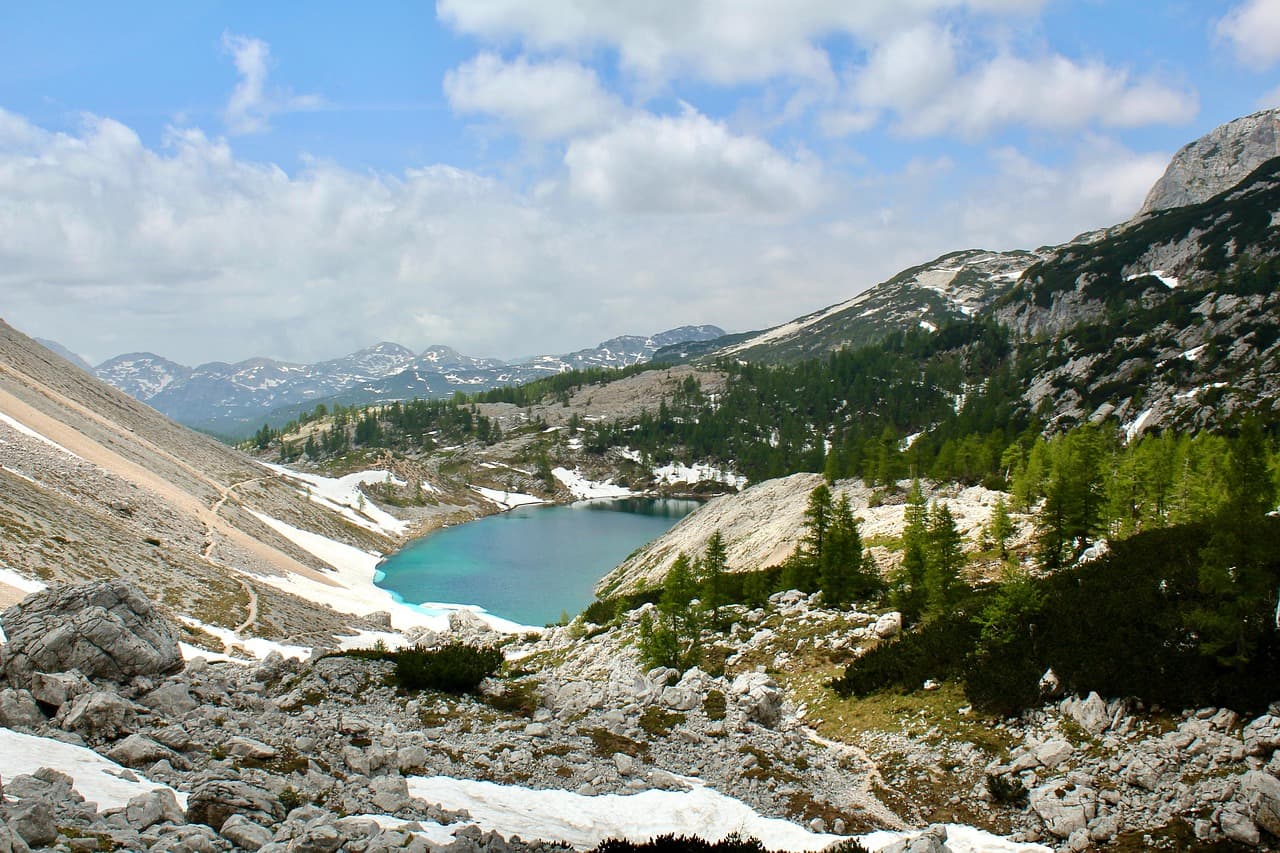
The last patch of ice on the Triglav glacier has gone. New photographs of the mountainside, taken either side of snowfall in October, confirm that no ice remains after a scorching summer on Slovenia's highest peak.
A glacier measured for decades
The Triglav glacier once stretched far across the mountain. Historical photographs and documents show it covered about 40 hectares in the mid-1800s, but the decline was already well advanced when scientists began recording it properly.
- •By 1946, when scientists conducted the first formal measurements, its area had shrunk to just 14 hectares.
- •Between 1983 and 2003 the glacier lost 93% of its surface area, shrinking to cover less than a hectare.
Even then the ice refused to follow the script. Researchers had feared its imminent demise, yet it went on to surprise them, clinging to the mountain for roughly two more decades before disappearing.
The final five years
The endgame came quickly. The last five years, which include Europe's three hottest years on record, melted the remaining body down to isolated pockets measuring just a few metres by the end of summer.
Heatwaves intensified by carbon pollution ravaged the Alps, reducing large white glaciers to what scientists have called "moonlike" rock deserts.
Miha Pavšek, a glaciologist and mountain guide whose parents were photographed at the glacier in 1957, said: "There are some things that humans thought were eternal. Glaciers are obviously not."
He has also observed that "nature is changing in front of our eyes", but that people are not yet taking it seriously.
What the loss means
For Matija Zorn, director of the Anton Melik Geographical Institute, the disappearance is both personal and scientific. He first took measurements at the glacier in 2001 and remembers using crampons at a spot that retreated year after year as the ice receded.
"The melting is incredible," Zorn said. He recalled that in 2002 a team pulled out a 5-metre ice core for geochemical analysis; when he returned to the same spot a year later, the ice had gone and there was only rock underfoot.
He knew the trend, yet the pace still caught him off guard. "Every year I knew that the ice was going to be less and less," he said. "But I was shocked every year [by] how much less ice was up there."
According to Zorn, Mount Triglav holds a central place in Slovenian national identity. The peak is a cultural touchpoint that Slovenians are expected to climb at least once, and with the glacier's demise the country loses an important climate-change indicator.
What remains on Triglav and in Slovenia
The retreat has opened unexpected ground. As the ice receded, scientists have found ice in the caves beneath Triglav, exposed by newly accessible shafts.
Slovenia's second glacier, on Skuta mountain, has also shrunk and thinned. Its ice sits in better shade and is expected to hold out for a few more years.
The wider picture is stark. Swiss glaciologists found last month that nearly a fifth of Switzerland's glacier ice has vanished in the last five years, with a 5.5% volume drop in 2026.
Western Europe had its hottest summer on record this year, causing at least an estimated 50,000 heat deaths alongside failed harvests and power plants forced to shut down, with the damage to ecosystems still being assessed.