• Analysis
Spain snap election: polls close as turnout hits post-1975 high and Sánchez awaits verdict
Spain's snap general election concluded on Sunday with polling places shutting at 8pm local time, after turnout by 2pm reached 45.7% - the highest at that hour since 1975, according to official data. Prime Minister Pedro Sánchez's eight years in power hang on the count, with partial results expected later that night.
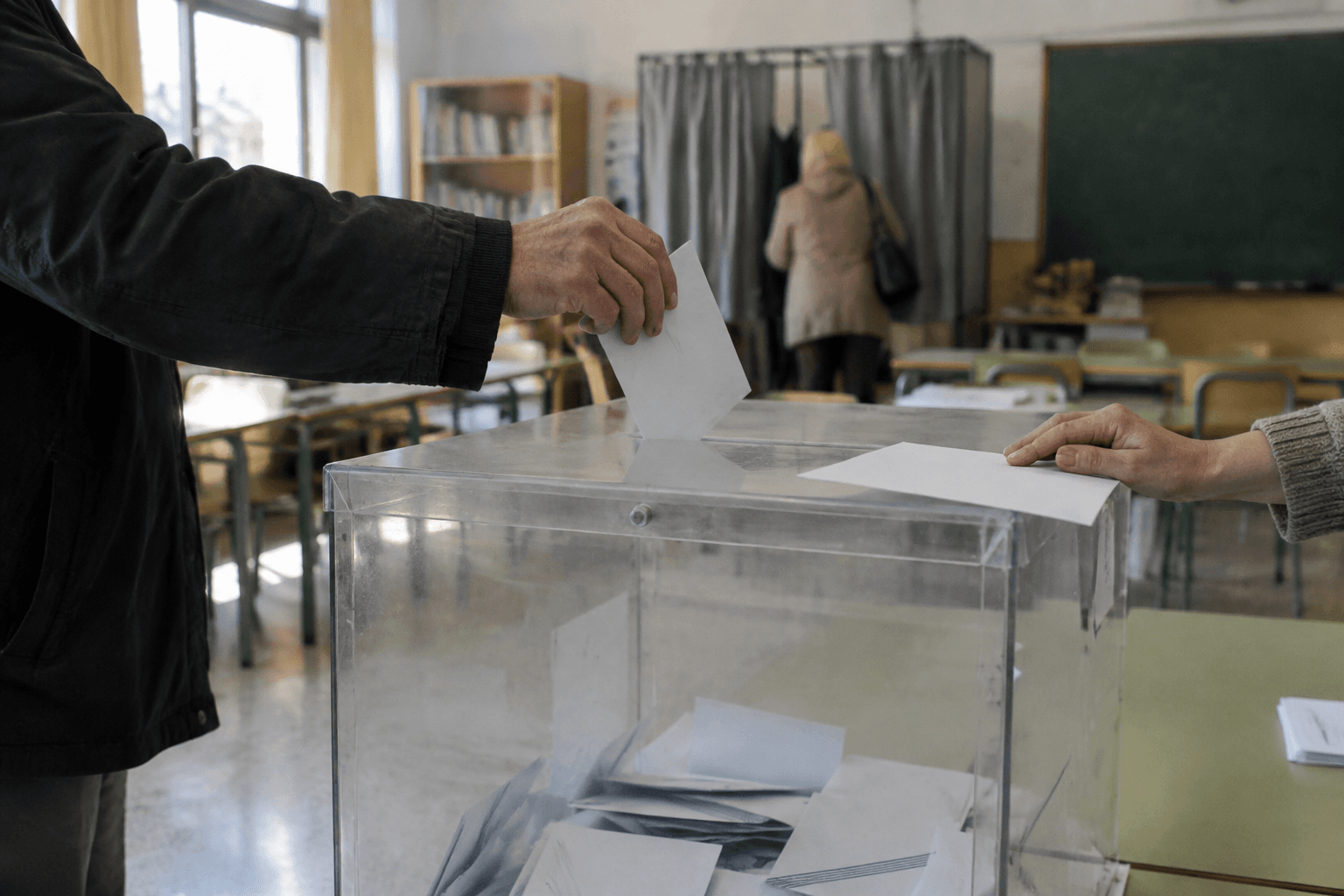
Record turnout at midday
Official figures put turnout at 45.7% by 2pm, up five percentage points on the last vote in 2023 and the highest at that point of the day since 1975. A further turnout update was due at 6pm local time (5pm UK), and partial results were expected later that night.
Higher turnout is thought to favour the prime minister, but the picture on the ground was more mixed:
- •Sánchez spoke of "historic mobilisation" when he cast his ballot.
- •An analysis by Europe Elects suggested the areas reporting the largest increases were not necessarily the ones most favourably looking at the prime minister.
What the polls say
Sánchez is widely expected to lose the election he called in October. Polls put opposition leader Alberto Núñez Feijóo ahead and set to end Sánchez's eight years in power, taking over as prime minister in a coalition with Santiago Abascal's far-right, anti-immigrant Vox party - which would put a far-right party in government for the first time since the country's return to democracy after the death of Gen Francisco Franco in 1975.
The contest has tightened, though. Sánchez's Spanish Socialist Workers' party (PSOE) has narrowed the distance between it and the poll-leading People's party (PP) to fewer than three percentage points. In the final days of the campaign, Sánchez focused on mobilising disenchanted left-wing voters, with some indications of movement in his direction, and he noted that polls have been wrong in the past.
Leaders cast their votes
Voting day in Madrid brought the rival leaders to the polls within hours of each other. Sánchez told reporters the election "is very important not only for Spain, but also for Europe", urging Spaniards to vote in large numbers to send a clear message.
Feijóo, also voting in the capital, asked voters to cast their ballots "with enthusiasm and hope" and "without fear". He framed the day in starker terms: "Today is a day when Spaniards … decide the direction of Spain. It could mark a turning point."
"Today is a day when Spaniards … decide the direction of Spain. It could mark a turning point."
Two other figures also voted: far-right Vox party leader Santiago Abascal, and left-wing former Barcelona mayor Ada Colau. Colau, who leads the Broad Front coalition and was praised for an election debate performance earlier in the week, called on voters to turn out to "defend democracy, to defend public services [and] to defend the right to housing, pensions and decent salaries".
How the vote was called
Sánchez brought the election forward in October after three rightwing and far-right parties voted down his emergency housing legislation in congress; the next election had not been due until summer the following year.
The trigger was a wave of public anger over soaring rents that erupted in September, when María del Carmen Abascal, an 87-year-old woman, was evicted from her Madrid home because she could not afford a 230% rent increase demanded by the investment fund that bought her apartment. Sánchez's minority coalition government responded with measures including a ban on evictions until 2030 and the regulation of temporary lettings and lettings by room. The proposals were blocked by the conservative People's party, far-right Vox and rightwing Catalan separatist Junts.
Polls closed at 8pm local time (7pm UK time), with partial results expected later that night.