Saturday, October 24, 2026

english

HAUT MONDE

POST

World

• Analysis

Rubio tells Cubans 'now is the time' to act for political change

Secretary of state Marco Rubio urged Cubans seeking political change to act, saying "now is the time", moments after Donald Trump suggested US warships returning from the Iran war could intervene in Cuba.

By Haut Monde Post

• October 24, 2026

• 4 Min Read
Rubio tells Cubans 'now is the time' to act for political change

Rubio's message to Cubans

Secretary of state Marco Rubio, whose parents left Cuba for the United States before the socialist revolution there, issued the appeal in a social media post addressed to Cubans who want political change [F1, F4]. He wrote it to those who seek to create positive change, urging them to "seize this opportunity to create the change you desire through a discrete [sic] partnership with the CIA" - apparently misspelling "discreet" as "discrete" [F3, F5].

Now is the time.

Rubio had not spoken at length on Cuba publicly since a 29 September interview with Fox News host Sean Hannity, in which he said "The truth is Cuba has already fallen. It doesn't have a functional economy" and that the US would never allow the island to become a base of operation against American interests [F17, F18, F19].

Trump's warship plan at the Florida rally

The post came moments after Donald Trump told a Friday rally for candidates in south Florida that US warships could intervene in Cuba on their way back from the Iran war. Trump described a plan in which ships returning from Iran would stop about 50 yards off the Cuban coast, and said he would send Rubio in to "finish up the deal".

The idea was not new: Trump first floated it earlier this year, but had not mentioned it in recent months, reviving it in response to a shouted question from the crowd. He had previously suggested Cuba would "be next" in terms of intervention abroad.

Havana's response

The Cuban government mocked the "desperation" of the US after the two comments. Deputy foreign minister Carlos Fernandez de Cossio said the US was resorting to public recruitment for the CIA.

There must be a great deal of desperation or misery within the agency.

Fernandez de Cossio made the remark in writing, saying the agency must be desperate to sell its services like a tube of toothpaste.

A weeks-long escalation

The exchange caps a stretch of repeated statements from both administrations:

  • •In May, Trump and Rubio raised the possibility of US military intervention in Cuba, a threat that gained weight after criminal charges were announced against Raúl Castro.
  • •Trump told reporters in the Oval Office that previous presidents had considered intervening for decades but "it looks like I'll be the one that does it".
  • •Rubio said Cuba had been a national security threat for years because of its ties to US adversaries, and that while the administration wanted to resolve differences peacefully, he doubted a diplomatic resolution was possible with Cuba's current government [F15, F16].
  • •Rubio and other top Trump aides met Cuban officials in recent months to explore improved relations; the US came away unimpressed and imposed more sanctions.
  • •At last month's UN general assembly, Trump said Rubio was "deep into negotiations with Cuba" and would not allow a haven for foreign adversaries to threaten America on its own doorstep [F21, F22].
  • •Days later, Trump said he anticipated a deal and did not expect the military to be needed, adding "I don't think we'll need the military. Cuba is failing very badly."

The comments came days before midterm elections in which voters voiced concern about the Iran war's impact on prices, and earlier this week the two countries clashed at the UN over the annual vote condemning Washington's decades-long economic embargo against Havana [F7, F24].

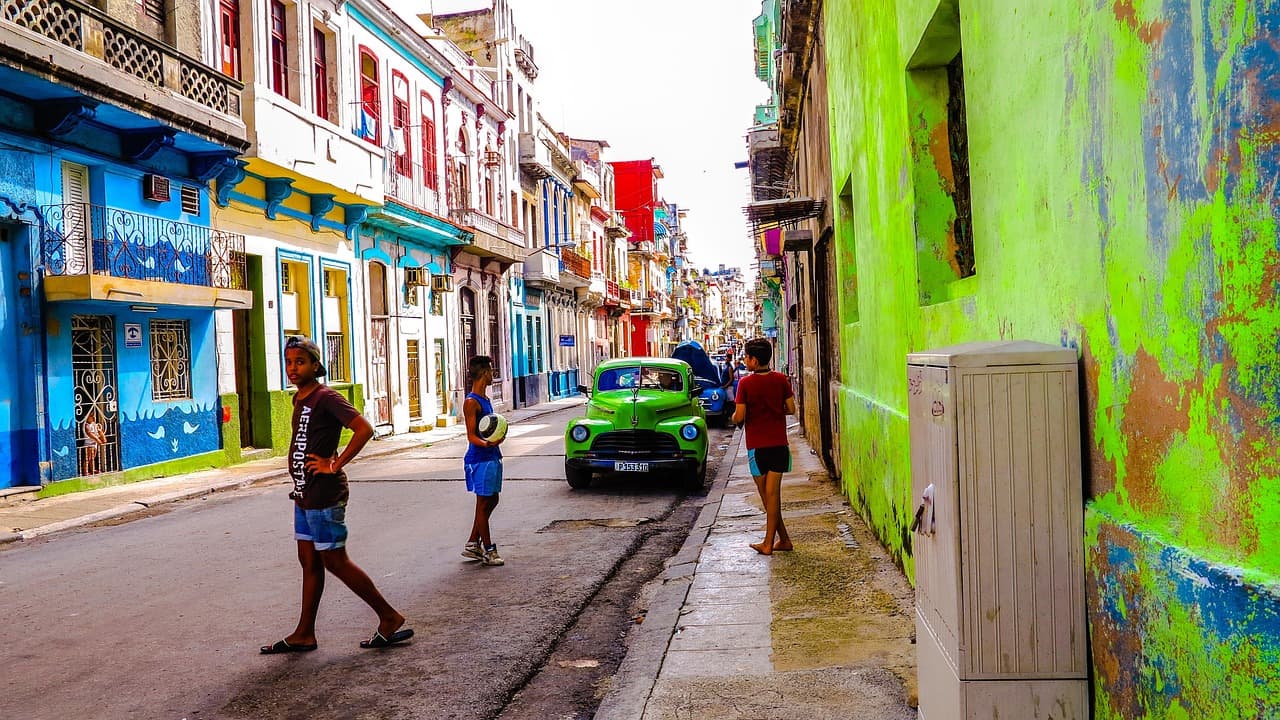
Cuba, meanwhile, has struggled since 2020 with an economic and energy crisis: its GDP has shrunk and its 10 million residents have endured blackouts, food shortages and inflation, with waves of protests and hundreds of thousands of Cubans leaving the country, many for the United States [F25, F26].


HAUT MONDE POST

Independent journalism of the highest standard. A chronicle of world culture, politics, arts, and public thought.

Publication

AboutEditorial

Newsletter

Get the best Haut Monde Post content delivered to your inbox every week.

© 2026 Haut Monde Post. All rights reserved. Digital edition hautmondepost.com.

Saturday, Oct 24, 2026

english

World

• Analysis

Rubio tells Cubans 'now is the time' to act for political change

Secretary of state Marco Rubio urged Cubans seeking political change to act, saying "now is the time", moments after Donald Trump suggested US warships returning from the Iran war could intervene in Cuba.

By Haut Monde Post

Oct 24, 2026 • 4 Min Read

Rubio tells Cubans 'now is the time' to act for political change

Rubio's message to Cubans

Secretary of state Marco Rubio, whose parents left Cuba for the United States before the socialist revolution there, issued the appeal in a social media post addressed to Cubans who want political change [F1, F4]. He wrote it to those who seek to create positive change, urging them to "seize this opportunity to create the change you desire through a discrete [sic] partnership with the CIA" - apparently misspelling "discreet" as "discrete" [F3, F5].

Now is the time.

Rubio had not spoken at length on Cuba publicly since a 29 September interview with Fox News host Sean Hannity, in which he said "The truth is Cuba has already fallen. It doesn't have a functional economy" and that the US would never allow the island to become a base of operation against American interests [F17, F18, F19].

Trump's warship plan at the Florida rally

The post came moments after Donald Trump told a Friday rally for candidates in south Florida that US warships could intervene in Cuba on their way back from the Iran war. Trump described a plan in which ships returning from Iran would stop about 50 yards off the Cuban coast, and said he would send Rubio in to "finish up the deal".

The idea was not new: Trump first floated it earlier this year, but had not mentioned it in recent months, reviving it in response to a shouted question from the crowd. He had previously suggested Cuba would "be next" in terms of intervention abroad.

Havana's response

The Cuban government mocked the "desperation" of the US after the two comments. Deputy foreign minister Carlos Fernandez de Cossio said the US was resorting to public recruitment for the CIA.

There must be a great deal of desperation or misery within the agency.

Fernandez de Cossio made the remark in writing, saying the agency must be desperate to sell its services like a tube of toothpaste.

A weeks-long escalation

The exchange caps a stretch of repeated statements from both administrations:

  • •In May, Trump and Rubio raised the possibility of US military intervention in Cuba, a threat that gained weight after criminal charges were announced against Raúl Castro.
  • •Trump told reporters in the Oval Office that previous presidents had considered intervening for decades but "it looks like I'll be the one that does it".
  • •Rubio said Cuba had been a national security threat for years because of its ties to US adversaries, and that while the administration wanted to resolve differences peacefully, he doubted a diplomatic resolution was possible with Cuba's current government [F15, F16].
  • •Rubio and other top Trump aides met Cuban officials in recent months to explore improved relations; the US came away unimpressed and imposed more sanctions.
  • •At last month's UN general assembly, Trump said Rubio was "deep into negotiations with Cuba" and would not allow a haven for foreign adversaries to threaten America on its own doorstep [F21, F22].
  • •Days later, Trump said he anticipated a deal and did not expect the military to be needed, adding "I don't think we'll need the military. Cuba is failing very badly."

The comments came days before midterm elections in which voters voiced concern about the Iran war's impact on prices, and earlier this week the two countries clashed at the UN over the annual vote condemning Washington's decades-long economic embargo against Havana [F7, F24].

Cuba, meanwhile, has struggled since 2020 with an economic and energy crisis: its GDP has shrunk and its 10 million residents have endured blackouts, food shortages and inflation, with waves of protests and hundreds of thousands of Cubans leaving the country, many for the United States [F25, F26].

HAUT MONDE POST

Independent journalism of the highest standard. A chronicle of world culture, politics, arts, and public thought. Published and printed daily in Paris, France.

Publication

AboutEditorial

Newsletter

Get the best Haut Monde Post content delivered to your inbox every week.

© 2026 Haut Monde Post. All rights reserved. Digital edition hautmondepost.com. Published in Paris.

Saturday, Oct 24, 2026

english

World

• Analysis

Rubio tells Cubans 'now is the time' to act for political change

Secretary of state Marco Rubio urged Cubans seeking political change to act, saying "now is the time", moments after Donald Trump suggested US warships returning from the Iran war could intervene in Cuba.

By Haut Monde Post

Oct 24, 2026 • 4 Min Read

Rubio tells Cubans 'now is the time' to act for political change

Rubio's message to Cubans

Secretary of state Marco Rubio, whose parents left Cuba for the United States before the socialist revolution there, issued the appeal in a social media post addressed to Cubans who want political change [F1, F4]. He wrote it to those who seek to create positive change, urging them to "seize this opportunity to create the change you desire through a discrete [sic] partnership with the CIA" - apparently misspelling "discreet" as "discrete" [F3, F5].

Now is the time.

Rubio had not spoken at length on Cuba publicly since a 29 September interview with Fox News host Sean Hannity, in which he said "The truth is Cuba has already fallen. It doesn't have a functional economy" and that the US would never allow the island to become a base of operation against American interests [F17, F18, F19].

Trump's warship plan at the Florida rally

The post came moments after Donald Trump told a Friday rally for candidates in south Florida that US warships could intervene in Cuba on their way back from the Iran war. Trump described a plan in which ships returning from Iran would stop about 50 yards off the Cuban coast, and said he would send Rubio in to "finish up the deal".

The idea was not new: Trump first floated it earlier this year, but had not mentioned it in recent months, reviving it in response to a shouted question from the crowd. He had previously suggested Cuba would "be next" in terms of intervention abroad.

Havana's response

The Cuban government mocked the "desperation" of the US after the two comments. Deputy foreign minister Carlos Fernandez de Cossio said the US was resorting to public recruitment for the CIA.

There must be a great deal of desperation or misery within the agency.

Fernandez de Cossio made the remark in writing, saying the agency must be desperate to sell its services like a tube of toothpaste.

A weeks-long escalation

The exchange caps a stretch of repeated statements from both administrations:

  • •In May, Trump and Rubio raised the possibility of US military intervention in Cuba, a threat that gained weight after criminal charges were announced against Raúl Castro.
  • •Trump told reporters in the Oval Office that previous presidents had considered intervening for decades but "it looks like I'll be the one that does it".
  • •Rubio said Cuba had been a national security threat for years because of its ties to US adversaries, and that while the administration wanted to resolve differences peacefully, he doubted a diplomatic resolution was possible with Cuba's current government [F15, F16].
  • •Rubio and other top Trump aides met Cuban officials in recent months to explore improved relations; the US came away unimpressed and imposed more sanctions.
  • •At last month's UN general assembly, Trump said Rubio was "deep into negotiations with Cuba" and would not allow a haven for foreign adversaries to threaten America on its own doorstep [F21, F22].
  • •Days later, Trump said he anticipated a deal and did not expect the military to be needed, adding "I don't think we'll need the military. Cuba is failing very badly."

The comments came days before midterm elections in which voters voiced concern about the Iran war's impact on prices, and earlier this week the two countries clashed at the UN over the annual vote condemning Washington's decades-long economic embargo against Havana [F7, F24].

Cuba, meanwhile, has struggled since 2020 with an economic and energy crisis: its GDP has shrunk and its 10 million residents have endured blackouts, food shortages and inflation, with waves of protests and hundreds of thousands of Cubans leaving the country, many for the United States [F25, F26].