Sunday, November 29, 2026

english

HAUT MONDE

POST

World

• Analysis

Friedrich Merz ties EU budget deal to all-27 Ukraine support as divisions persist

German Chancellor Friedrich Merz linked support for Ukraine to agreement on the EU's 2028-2034 budget, saying in Brussels: "For me, there is a link between our support for Ukraine and the European budget."
By Haut Monde Post

• November 27, 2026

• 3 Min Read

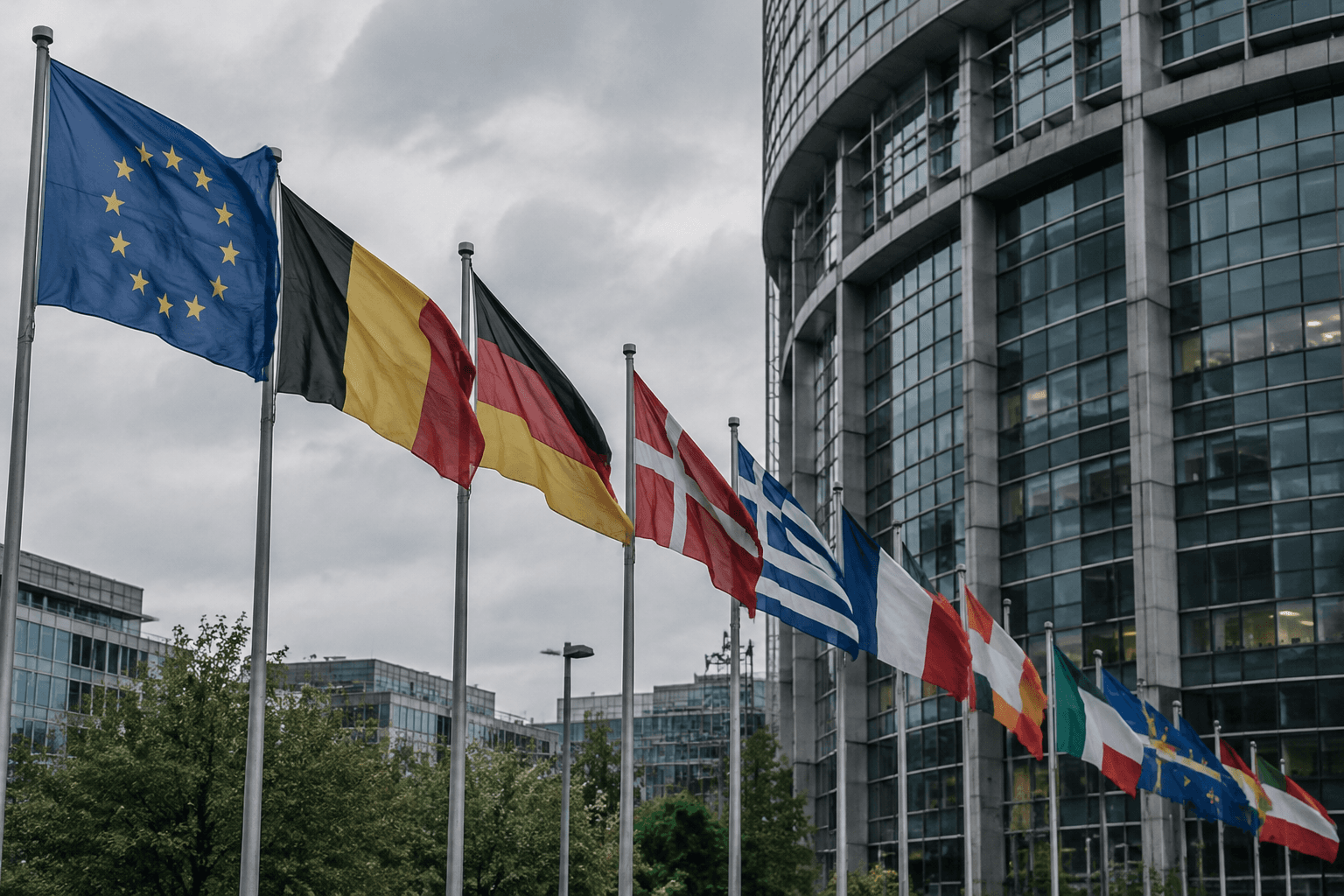
Flags of EU member states flying outside an office building in Brussels on an overcast morning.

Germany makes Ukraine participation a condition

German Chancellor Friedrich Merz drew a direct line between backing for Ukraine and the bloc's next long-term budget, saying: "For me, there is a link between our support for Ukraine and the European budget."

His position goes further than money alone. Germany and several other countries have made participation in a €45 billion loan for Ukraine a condition of any broader budget agreement. Merz insisted that every member state must be part of the effort: "The European Union comprises of 27 member states, not 23 or 24."

For me, there is a link between our support for Ukraine and the European budget.

The four objecting states

Four governments refuse to contribute to the Ukraine loan: Slovakia, the Czech Republic, Hungary and Bulgaria. These countries are among the major net beneficiaries of EU spending, while the net contributors include Germany, Sweden, the Netherlands and Finland.

  • •Slovakia
  • •The Czech Republic
  • •Hungary
  • •Bulgaria

The standoff sits inside a wider split over what the 2028-2034 budget should fund. Net contributors want reductions and spending that prioritises making the EU more competitive against rivals like the US and China, rather than agriculture and poorer regions. Net beneficiaries argue the budget should serve both aims, to sustain public support for the EU in the face of far-right parties' rising popularity.

What the money would do

At the centre of the dispute is a plan for the EU to borrow €45 billion and lend it to Ukraine, with repayment due only when Russia pays war reparations; the borrowing would be made against the current budget, which expires at the end of 2027. In 2027, non-EU countries including Britain, Norway, Japan, Switzerland and Canada are expected to add another €25 billion, bringing the total to €70 billion to cover the funding gap Ukraine faces next year.

The draft budget itself also earmarks money for Kyiv, though diplomats question whether it is enough:

  • •Up to €100 billion for Ukraine in the 2028-2034 draft, which diplomats say falls well short of the country's needs
  • •A proposed total of €1.582 trillion over seven years, including €140 billion to repay pandemic-era borrowing
  • •Around €740 billion, the largest line item, for European farmers and helping the poorest regions catch up with richer ones

The seven-year budget requires unanimous approval from all 27 member states.

Where negotiations stand

Thursday's talks in Brussels made little progress as discussions grew heated. Austrian Chancellor Christian Stocker defended the effort even without a result: "Even negotiations that do not lead to the desired outcome or the most positive result possible are necessary to make progress."

He added: "Even though we were apparently unable to bridge our differences today, we may know what is necessary to ensure success next time."

Both France and Germany want agreement on the budget and Ukraine financing by December 31, ahead of 2027 elections across the bloc, and Merz named the end of 2026 as the deadline leaders are working towards. The next step falls to Antonio Costa, the chair of EU summits, who is to present a budget proposal in the coming weeks, on which EU governments might agree at a meeting on December 17 and 18.

HAUT MONDE POST

Independent journalism of the highest standard. A chronicle of world culture, politics, arts, and public thought.

Publication

AboutEditorial

Newsletter

Get the best Haut Monde Post content delivered to your inbox every week.

© 2026 Haut Monde Post. All rights reserved. Digital edition hautmondepost.com.

Sunday, Nov 29, 2026

english

World

• Analysis

Friedrich Merz ties EU budget deal to all-27 Ukraine support as divisions persist

German Chancellor Friedrich Merz linked support for Ukraine to agreement on the EU's 2028-2034 budget, saying in Brussels: "For me, there is a link between our support for Ukraine and the European budget."

By Haut Monde Post

Nov 27, 2026 • 3 Min Read
Flags of EU member states flying outside an office building in Brussels on an overcast morning.

Germany makes Ukraine participation a condition

German Chancellor Friedrich Merz drew a direct line between backing for Ukraine and the bloc's next long-term budget, saying: "For me, there is a link between our support for Ukraine and the European budget."

His position goes further than money alone. Germany and several other countries have made participation in a €45 billion loan for Ukraine a condition of any broader budget agreement. Merz insisted that every member state must be part of the effort: "The European Union comprises of 27 member states, not 23 or 24."

For me, there is a link between our support for Ukraine and the European budget.

The four objecting states

Four governments refuse to contribute to the Ukraine loan: Slovakia, the Czech Republic, Hungary and Bulgaria. These countries are among the major net beneficiaries of EU spending, while the net contributors include Germany, Sweden, the Netherlands and Finland.

  • •Slovakia
  • •The Czech Republic
  • •Hungary
  • •Bulgaria

The standoff sits inside a wider split over what the 2028-2034 budget should fund. Net contributors want reductions and spending that prioritises making the EU more competitive against rivals like the US and China, rather than agriculture and poorer regions. Net beneficiaries argue the budget should serve both aims, to sustain public support for the EU in the face of far-right parties' rising popularity.

What the money would do

At the centre of the dispute is a plan for the EU to borrow €45 billion and lend it to Ukraine, with repayment due only when Russia pays war reparations; the borrowing would be made against the current budget, which expires at the end of 2027. In 2027, non-EU countries including Britain, Norway, Japan, Switzerland and Canada are expected to add another €25 billion, bringing the total to €70 billion to cover the funding gap Ukraine faces next year.

The draft budget itself also earmarks money for Kyiv, though diplomats question whether it is enough:

  • •Up to €100 billion for Ukraine in the 2028-2034 draft, which diplomats say falls well short of the country's needs
  • •A proposed total of €1.582 trillion over seven years, including €140 billion to repay pandemic-era borrowing
  • •Around €740 billion, the largest line item, for European farmers and helping the poorest regions catch up with richer ones

The seven-year budget requires unanimous approval from all 27 member states.

Where negotiations stand

Thursday's talks in Brussels made little progress as discussions grew heated. Austrian Chancellor Christian Stocker defended the effort even without a result: "Even negotiations that do not lead to the desired outcome or the most positive result possible are necessary to make progress."

He added: "Even though we were apparently unable to bridge our differences today, we may know what is necessary to ensure success next time."

Both France and Germany want agreement on the budget and Ukraine financing by December 31, ahead of 2027 elections across the bloc, and Merz named the end of 2026 as the deadline leaders are working towards. The next step falls to Antonio Costa, the chair of EU summits, who is to present a budget proposal in the coming weeks, on which EU governments might agree at a meeting on December 17 and 18.
HAUT MONDE POST

Independent journalism of the highest standard. A chronicle of world culture, politics, arts, and public thought. Published and printed daily in Paris, France.

Publication

AboutEditorial

Newsletter

Get the best Haut Monde Post content delivered to your inbox every week.

© 2026 Haut Monde Post. All rights reserved. Digital edition hautmondepost.com. Published in Paris.

Sunday, Nov 29, 2026

english

World

• Analysis

Friedrich Merz ties EU budget deal to all-27 Ukraine support as divisions persist

German Chancellor Friedrich Merz linked support for Ukraine to agreement on the EU's 2028-2034 budget, saying in Brussels: "For me, there is a link between our support for Ukraine and the European budget."

By Haut Monde Post

Flags of EU member states flying outside an office building in Brussels on an overcast morning.

Germany makes Ukraine participation a condition

German Chancellor Friedrich Merz drew a direct line between backing for Ukraine and the bloc's next long-term budget, saying: "For me, there is a link between our support for Ukraine and the European budget."

His position goes further than money alone. Germany and several other countries have made participation in a €45 billion loan for Ukraine a condition of any broader budget agreement. Merz insisted that every member state must be part of the effort: "The European Union comprises of 27 member states, not 23 or 24."

For me, there is a link between our support for Ukraine and the European budget.

The four objecting states

Four governments refuse to contribute to the Ukraine loan: Slovakia, the Czech Republic, Hungary and Bulgaria. These countries are among the major net beneficiaries of EU spending, while the net contributors include Germany, Sweden, the Netherlands and Finland.

  • •Slovakia
  • •The Czech Republic
  • •Hungary
  • •Bulgaria

The standoff sits inside a wider split over what the 2028-2034 budget should fund. Net contributors want reductions and spending that prioritises making the EU more competitive against rivals like the US and China, rather than agriculture and poorer regions. Net beneficiaries argue the budget should serve both aims, to sustain public support for the EU in the face of far-right parties' rising popularity.

What the money would do

At the centre of the dispute is a plan for the EU to borrow €45 billion and lend it to Ukraine, with repayment due only when Russia pays war reparations; the borrowing would be made against the current budget, which expires at the end of 2027. In 2027, non-EU countries including Britain, Norway, Japan, Switzerland and Canada are expected to add another €25 billion, bringing the total to €70 billion to cover the funding gap Ukraine faces next year.

The draft budget itself also earmarks money for Kyiv, though diplomats question whether it is enough:

  • •Up to €100 billion for Ukraine in the 2028-2034 draft, which diplomats say falls well short of the country's needs
  • •A proposed total of €1.582 trillion over seven years, including €140 billion to repay pandemic-era borrowing
  • •Around €740 billion, the largest line item, for European farmers and helping the poorest regions catch up with richer ones

The seven-year budget requires unanimous approval from all 27 member states.

Where negotiations stand

Thursday's talks in Brussels made little progress as discussions grew heated. Austrian Chancellor Christian Stocker defended the effort even without a result: "Even negotiations that do not lead to the desired outcome or the most positive result possible are necessary to make progress."

He added: "Even though we were apparently unable to bridge our differences today, we may know what is necessary to ensure success next time."

Both France and Germany want agreement on the budget and Ukraine financing by December 31, ahead of 2027 elections across the bloc, and Merz named the end of 2026 as the deadline leaders are working towards. The next step falls to Antonio Costa, the chair of EU summits, who is to present a budget proposal in the coming weeks, on which EU governments might agree at a meeting on December 17 and 18.