• Analysis
Russian Military Satellite Cosmos-2612 Moved Dangerously Close to Ukrainian Imaging Satellite Iceye-X36
The Russian military satellite Cosmos-2612 manoeuvred between October 15 and 18, 2026, bringing it dangerously close to Iceye-X36, a commercial satellite supplying radar images to the Ukrainian Armed Forces, according to the US State Department and French space surveillance firm Aldoria.
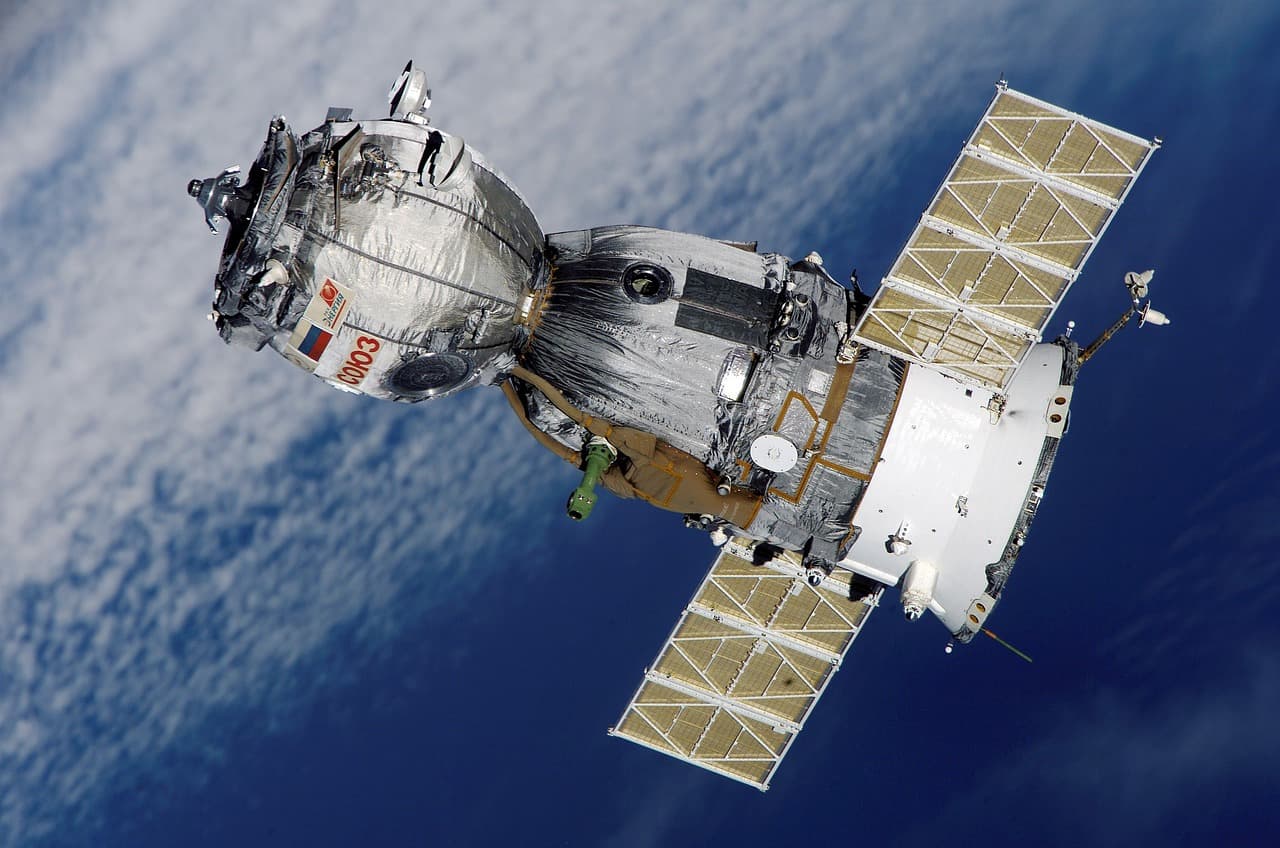
A Close Approach in Orbit
Between October 15 and 18, 2026, the Russian military satellite Cosmos-2612 carried out a manoeuvre that brought it dangerously close to Iceye-X36, the commercial satellite that supplies radar imagery to Ukraine. According to Aldoria orbital analyst Norbert Pouzin, Cosmos-2612 was within 5 kilometres of Iceye-X36 on October 15, and its position kept narrowing over October 16 and 17 to within a few hundred metres and a kilometre.
The Russian spacecraft had begun some 400-500 km from Iceye-X36 before diverting to close in. On October 22, satellite imaging company Vantor published a photo of the pair showing their orbits within just 1.02 kilometres of one another.
The Satellite Supplying Images to Ukraine
Iceye-X36 is operated by the Finnish company Iceye. It is a Finnish-American civilian satellite fitted with synthetic-aperture radar (SAR), and its images go directly to the Ukrainian Armed Forces.
Tracked Since Launch
Cosmos-2612 launched on April 6, 2026 alongside five other satellites: Cosmos-2609, Cosmos-2610, Cosmos-2611, Cosmos-2613 and Cosmos-2614. Pouzin said the group's behaviour stood out from the very start.
"It was immediately apparent that this wasn't a classic deployment. As soon as they took off, the satellites started changing orbit to pursue Iceye satellites."
- •Changing orbit consumes a large amount of fuel, Pouzin noted, but once a satellite shares an orbit with another, the most costly part of an approach is already done.
- •Data from KeepTrack, a site specialising in satellite navigation that lets viewers track the paths of the Cosmos satellites, later showed Cosmos-2612 and Iceye-X36 on the same orbit.
That shared orbit means the Russian satellite was following the Finnish-American one.
What Washington and Analysts Say
The US State Department said Russia's tactic was consistent with "in-orbit military operations", and the US Under Secretary of State for Arms Control and International Security described the move as "threatening".
Pouzin, whose firm Aldoria conducts space surveillance, offered a reading of what the approach might be for. Since the absence of debris indicates Iceye-X36 was likely not the target of a "kinetic" attack, he suggested the manoeuvre could be interpreted as a form of exerting pressure on Ukraine, as it is the direct recipient of the data gathered by the Iceye satellite.
He also pointed to the intelligence value of radar satellites: if an operator knows a SAR satellite's observation plans, he could - for a short time - disrupt the satellite's mission, with repercussions for ground or maritime operations.
Russia regularly launches military satellites in the same orbital planes as classified American military satellites, Pouzin noted, but carrying out this particular kind of approach on a commercial satellite while in a low orbit is something new. In his view, the move demonstrated a certain agility by the Russian operator, a skilled knowledge of the space domain, and a very high level of mastery of this type of navigation.