Tuesday, October 20, 2026

english

HAUT MONDE

POST

World

• Analysis

Alberta referendum: voters reject leaving Canada as 76% back staying

Alberta voters have overwhelmingly rejected a proposal to begin a process toward separation from Canada, with about 76% supporting remaining versus 23% backing a separation process, CBC projects.

By Haut Monde Post

• October 20, 2026

• 3 Min Read
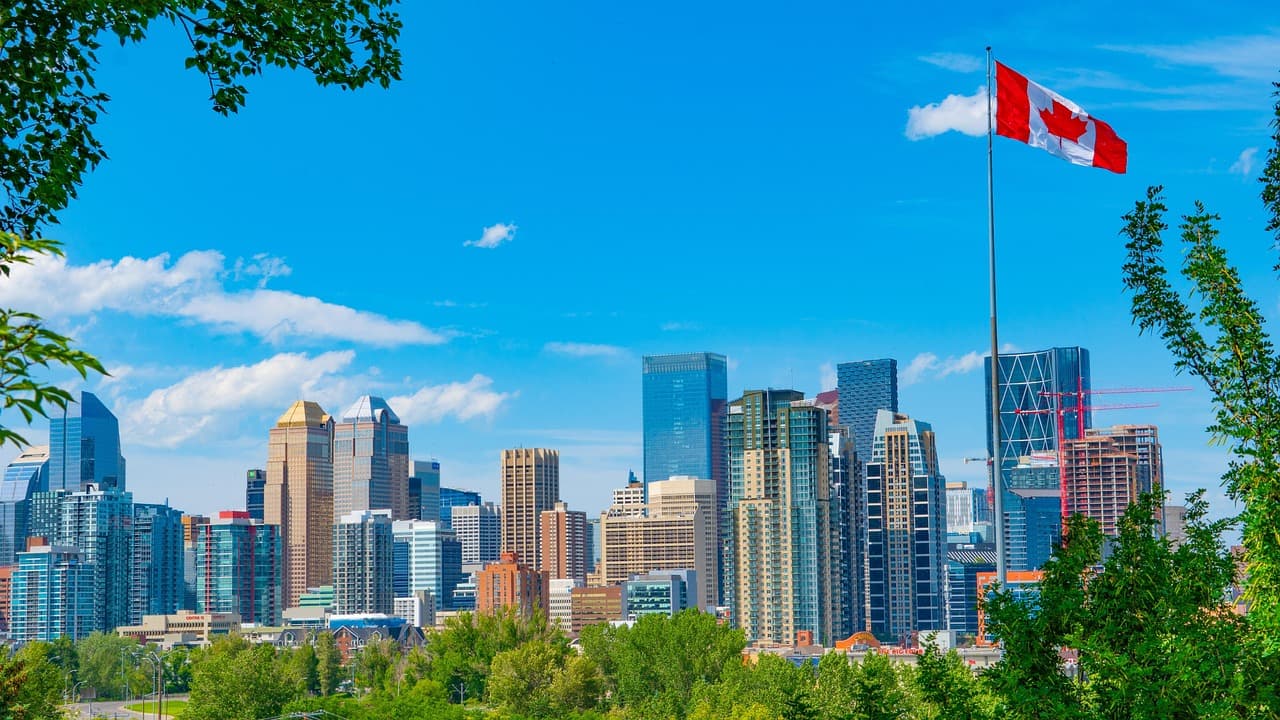
Alberta referendum: voters reject leaving Canada as 76% back staying

How the Alberta referendum vote unfolded

The national broadcaster CBC has projected that Albertans decisively turned back the question of starting a process toward independence, a result that counts as a win for prime minister Mark Carney and for backers of Canadian unity. With more than 1 million ballots counted early Tuesday and roughly a third tallied, about 76% wanted to stay in Canada against 23% who favoured opening a path to separation.

  • •The separation question was one of 10 put to Albertans on Monday, alongside items on immigration, healthcare, education and the province's constitutional powers
  • •The ballot did not explicitly ask about independence - a point that frustrated separatists - but it exposed splits in Alberta politics and raised questions about national unity
  • •Results came more than two hours late after delays at roughly 100 of the province's 1,400 polling stations

Carney, Poilievre and Smith on the question

Carney, who grew up in Edmonton, cautioned against using the ballot to protest against the federal government. "A vote against Canada is a dangerous bluff that will lead to years of deep uncertainty," he said.

Conservative leader Pierre Poilievre, whose parliamentary seat sits in Alberta, told supporters that Albertans were not "quitters" and framed the country in broader terms: "Canada is more than a government. It is a people, a flag, a land, a history and a promise."

Premier Danielle Smith said publicly that she will vote to remain in Canada, but stopped short of requiring elected members of her United Conservative party to follow her lead.

Turnout and political stakes

Advance voting and mail-in ballots had already brought roughly 43% of eligible voters - about 1.3 million Albertans - to the polls before Monday, according to Elections Alberta data, pointing to a potentially higher turnout than the province's last referendum in 2021. In the days before the vote, provincial leaders and federal politicians crisscrossed Alberta to argue the case for a unified country.

The referendum has proved a political liability for Smith's party, whose support has tumbled, including the loss of a one-time conservative stronghold in a byelection. Her leadership owes much to separatists within the party who ousted her predecessor, Jason Kenney, and she has worked to keep both separatists and federalists on side.

What happens next

Elections Alberta said the remaining results could take days to count. Separatists showed no sign of standing down: members of the independence movement said they would continue their push despite the result, which they regard as a long-term project. Calgary mayor Jeromy Farkas, an opponent of the movement, said before the results that the city's best future is as a Canadian city, amid fears that uncertainty could drive capital out - adding that he is Canadian regardless of who holds the prime minister's office.

HAUT MONDE POST

Independent journalism of the highest standard. A chronicle of world culture, politics, arts, and public thought.

Publication

AboutEditorial

Newsletter

Get the best Haut Monde Post content delivered to your inbox every week.

© 2026 Haut Monde Post. All rights reserved. Digital edition hautmondepost.com.

Tuesday, Oct 20, 2026

english

World

• Analysis

Alberta referendum: voters reject leaving Canada as 76% back staying

Alberta voters have overwhelmingly rejected a proposal to begin a process toward separation from Canada, with about 76% supporting remaining versus 23% backing a separation process, CBC projects.

By Haut Monde Post

Oct 20, 2026 • 3 Min Read

Alberta referendum: voters reject leaving Canada as 76% back staying

How the Alberta referendum vote unfolded

The national broadcaster CBC has projected that Albertans decisively turned back the question of starting a process toward independence, a result that counts as a win for prime minister Mark Carney and for backers of Canadian unity. With more than 1 million ballots counted early Tuesday and roughly a third tallied, about 76% wanted to stay in Canada against 23% who favoured opening a path to separation.

  • •The separation question was one of 10 put to Albertans on Monday, alongside items on immigration, healthcare, education and the province's constitutional powers
  • •The ballot did not explicitly ask about independence - a point that frustrated separatists - but it exposed splits in Alberta politics and raised questions about national unity
  • •Results came more than two hours late after delays at roughly 100 of the province's 1,400 polling stations

Carney, Poilievre and Smith on the question

Carney, who grew up in Edmonton, cautioned against using the ballot to protest against the federal government. "A vote against Canada is a dangerous bluff that will lead to years of deep uncertainty," he said.

Conservative leader Pierre Poilievre, whose parliamentary seat sits in Alberta, told supporters that Albertans were not "quitters" and framed the country in broader terms: "Canada is more than a government. It is a people, a flag, a land, a history and a promise."

Premier Danielle Smith said publicly that she will vote to remain in Canada, but stopped short of requiring elected members of her United Conservative party to follow her lead.

Turnout and political stakes

Advance voting and mail-in ballots had already brought roughly 43% of eligible voters - about 1.3 million Albertans - to the polls before Monday, according to Elections Alberta data, pointing to a potentially higher turnout than the province's last referendum in 2021. In the days before the vote, provincial leaders and federal politicians crisscrossed Alberta to argue the case for a unified country.

The referendum has proved a political liability for Smith's party, whose support has tumbled, including the loss of a one-time conservative stronghold in a byelection. Her leadership owes much to separatists within the party who ousted her predecessor, Jason Kenney, and she has worked to keep both separatists and federalists on side.

What happens next

Elections Alberta said the remaining results could take days to count. Separatists showed no sign of standing down: members of the independence movement said they would continue their push despite the result, which they regard as a long-term project. Calgary mayor Jeromy Farkas, an opponent of the movement, said before the results that the city's best future is as a Canadian city, amid fears that uncertainty could drive capital out - adding that he is Canadian regardless of who holds the prime minister's office.
HAUT MONDE POST

Independent journalism of the highest standard. A chronicle of world culture, politics, arts, and public thought. Published and printed daily in Paris, France.

Publication

AboutEditorial

Newsletter

Get the best Haut Monde Post content delivered to your inbox every week.

© 2026 Haut Monde Post. All rights reserved. Digital edition hautmondepost.com. Published in Paris.

Tuesday, Oct 20, 2026

english

World

• Analysis

Alberta referendum: voters reject leaving Canada as 76% back staying

Alberta voters have overwhelmingly rejected a proposal to begin a process toward separation from Canada, with about 76% supporting remaining versus 23% backing a separation process, CBC projects.

By Haut Monde Post

Oct 20, 2026 • 3 Min Read

Alberta referendum: voters reject leaving Canada as 76% back staying

How the Alberta referendum vote unfolded

The national broadcaster CBC has projected that Albertans decisively turned back the question of starting a process toward independence, a result that counts as a win for prime minister Mark Carney and for backers of Canadian unity. With more than 1 million ballots counted early Tuesday and roughly a third tallied, about 76% wanted to stay in Canada against 23% who favoured opening a path to separation.

  • •The separation question was one of 10 put to Albertans on Monday, alongside items on immigration, healthcare, education and the province's constitutional powers
  • •The ballot did not explicitly ask about independence - a point that frustrated separatists - but it exposed splits in Alberta politics and raised questions about national unity
  • •Results came more than two hours late after delays at roughly 100 of the province's 1,400 polling stations

Carney, Poilievre and Smith on the question

Carney, who grew up in Edmonton, cautioned against using the ballot to protest against the federal government. "A vote against Canada is a dangerous bluff that will lead to years of deep uncertainty," he said.

Conservative leader Pierre Poilievre, whose parliamentary seat sits in Alberta, told supporters that Albertans were not "quitters" and framed the country in broader terms: "Canada is more than a government. It is a people, a flag, a land, a history and a promise."

Premier Danielle Smith said publicly that she will vote to remain in Canada, but stopped short of requiring elected members of her United Conservative party to follow her lead.

Turnout and political stakes

Advance voting and mail-in ballots had already brought roughly 43% of eligible voters - about 1.3 million Albertans - to the polls before Monday, according to Elections Alberta data, pointing to a potentially higher turnout than the province's last referendum in 2021. In the days before the vote, provincial leaders and federal politicians crisscrossed Alberta to argue the case for a unified country.

The referendum has proved a political liability for Smith's party, whose support has tumbled, including the loss of a one-time conservative stronghold in a byelection. Her leadership owes much to separatists within the party who ousted her predecessor, Jason Kenney, and she has worked to keep both separatists and federalists on side.

What happens next

Elections Alberta said the remaining results could take days to count. Separatists showed no sign of standing down: members of the independence movement said they would continue their push despite the result, which they regard as a long-term project. Calgary mayor Jeromy Farkas, an opponent of the movement, said before the results that the city's best future is as a Canadian city, amid fears that uncertainty could drive capital out - adding that he is Canadian regardless of who holds the prime minister's office.