• Analysis
Senate permitting bill Baaja faces first Senate vote Monday
The Senate is set to hold an initial procedural vote on Monday on the Bipartisan American Affordability and Jobs act, a 417-page Senate permitting bill that would ease construction of gas pipelines and clean energy transmission lines. Donald Trump has urged all senators to vote for it.
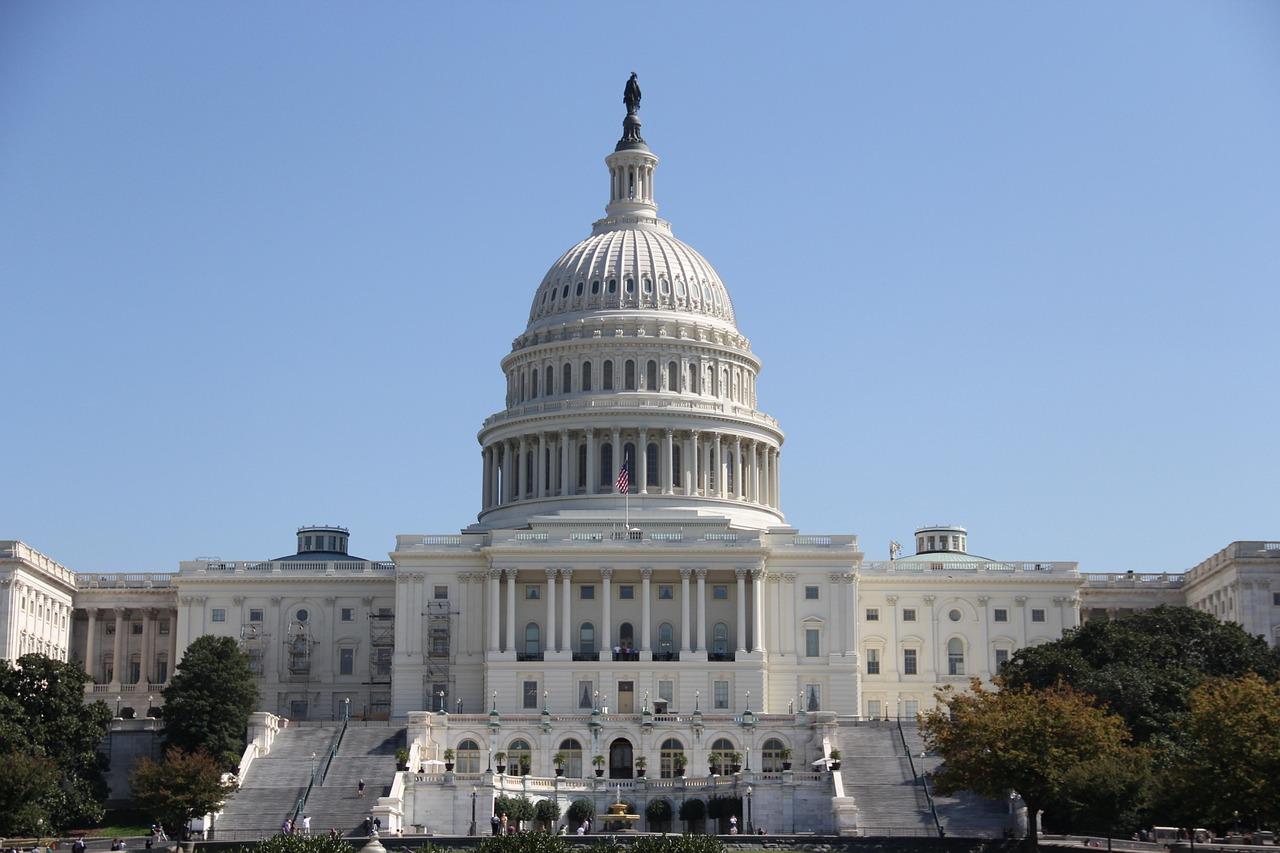
The Bipartisan American Affordability and Jobs act, known as Baaja, is scheduled for an initial procedural vote in the Senate on Monday. The 417-page Senate permitting bill would make it easier to build everything from fossil fuel pipelines to transmission lines that would add more clean energy to the grid, and Donald Trump has urged all senators to vote for it. It carries the sponsorship of two Republicans and two Democrats in the Senate. [F1, F2, F3, F4]
What the bill would change
Baaja would roll back environmental and social protections to speed up large infrastructure construction. According to a summary of its provisions, the measure:
- •simplifies federal rules for building interstate transmission lines, a form of clean energy transmission that can take a decade to complete;
- •narrows what gets reviewed under the National Historic Preservation Act and limits tribal consultation and the use of the Clean Water Act;
- •shortens timelines under the Endangered Species Act and limits executive interference with permitting;
- •narrows the definition of a "major federal action" that would trigger review under the National Environmental Policy Act, and would effectively eliminate courts' authority to enforce Nepa compliance. [F18, F32]
Abbie Dillen, president of Earthjustice Action, said Baaja's passage would be "the single biggest overhaul" of American environmental laws since the 1970s.
Environmental and tribal opposition
Opposition has come from Earthjustice, the Sierra Club and the ACLU, which say the bill would significantly weaken environmental laws including the National Environmental Policy Act and accelerate gas pipelines permitting as well as ICE detention centers. Nepa has been used by attorneys to block the Trump administration's plans to convert 11 mega-warehouses into massive ICE detention centers, and an ACLU letter to senators said the bill would hamper, if not altogether thwart, critical work by the ACLU to halt ICE's expansion of immigrant detention. [F6, F33, F34]
"It creates a very accelerated fast track for gas pipelines," said Dillen, who added that the legislation excites the gas industry. She pointed to Trump's plan to allow drilling near Chaco Culture national historic park, a Unesco world heritage site. "Chaco Canyon is in the crosshairs," she said. [F20, F36, F37]
Indigenous groups held a press conference on Friday urging a no vote, saying the bill would weaken the federal government's legal obligation to consult tribes on projects that affect them. Mark Macarro, president of the National Congress of American Indians, was blunt at the event.
"This is such an existential threat to Indian country," said Mark Macarro.
After last week's historic "blue wave" elections, some environmental and tribal advocates called on Democratic leadership to pump the brakes. Protesters also rallied outside Senate minority leader Chuck Schumer's building on Friday over concerns that the bill could boost datacenters. [F5, F9]
Democratic sponsors defend the bill
On Monday, Democratic sponsors Martin Heinrich and Sheldon Whitehouse said they had the votes to pass the bill. Heinrich said they had made last-minute changes to ensure tribal consultation, and that the bill would favor renewables over fossil fuels. [F13, F14]
"If we can create an open, competitive level playing field, clean is cheap, and cheap wins in the marketplace," Heinrich said.
Whitehouse argued that passing the bill would set the stage for Democrats to work on clean energy policies next year, with House and Senate majorities. "People should just cool their jets and have a little faith that this is not the end of the story," he said. [F16, F17]
House minority leader Hakeem Jeffries, however, said the bill "falls short in several areas", including failing to protect tribal sovereignty, and he would not rubber-stamp it without more involvement with his caucus.
Industry backing and energy modeling
The American Petroleum Institute hailed the bill as "a historic opportunity" and called on Congress to "finish permitting reform this year".
The gas industry has concrete projects in view. The Constitution gas pipeline that Williams Companies wants to build through New York had its water quality permit denied by the state in 2016, but the company has revived the project under the Trump administration.
Western States and Tribal Nations, a fossil fuel advocacy group, wants to build gas pipelines to feed domestic datacenters and export LNG from the west coast. On 3 November, the group's president, Andrew Browning, told Sweetwater county commissioners he was talking to lawmakers about the bill. "The permitting bill's a huge thing … We're going to need that for everything we're envisioning and building out," he said. [F22, F23]
On the clean energy side, the stakes are large: at the end of 2025, 2,060 GW of total generation and storage capacity were waiting in the grid interconnection queue. Ben King of Rhodium Group said the bill would overhaul how that queue works and open the way to building the transmission the grid needs. [F24, F25]
"We're at a pretty low point for policy support for clean [energy]," King said, noting Trump repealed clean energy tax credits. "Our modeling suggests that clean stuff is going to dominate energy expansion for the foreseeable future," he added. [F26, F30]
The emissions picture, though, is disputed:
- •Rhodium Group's analysis found that domestic emissions go down if Baaja passes, assuming, based on a report from 2025, that 85% of the capacity added to the grid would be renewables. [F27, F28]
- •Purdue professor Kevin Kircher's model found emissions would increase. He noted some grid operators have updated queues to remove speculative offers, and that PJM's queue as of 3 August looks quite gassy. [F27, F29]
- •Kircher emphasized that the various models have not had time for peer review since the bill was first introduced on 30 September.
Democrats elected in the blue wave will not take their seats until January, so the bill could pass the Senate and House and reach Trump before the new Congress arrives.