Friday, November 20, 2026

english

HAUT MONDE

POST

World

• Analysis

Shenzhen Summit Impact: Rare Earth Truce Deadline Looms Over US-China Trade War

The 90-minute talks between Xi Jinping, Donald Trump and Vladimir Putin in Shenzhen on Thursday did little to resolve US-China trade tensions, leaving a rare earth truce that ends in January as the next test.
By Haut Monde Post

• November 19, 2026

• 2 Min Read

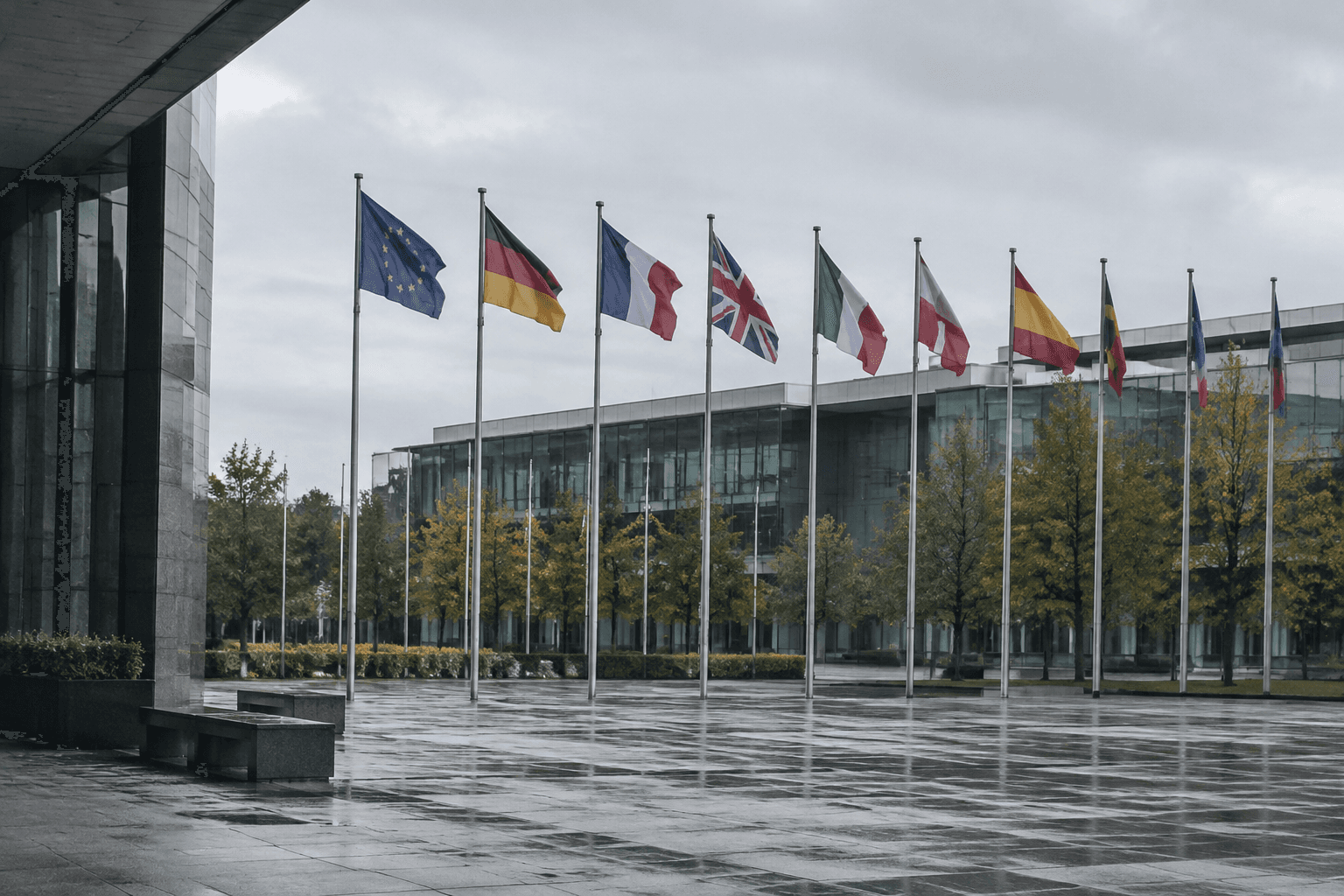
Flags of several countries hanging in rows outside a conference hall on an overcast morning, seen from across an empty plaza.

A truce with a January deadline

Chinese President Xi Jinping, US President Donald Trump and Russian President Vladimir Putin sat down together in Shenzhen on Thursday for talks lasting 90 minutes, on the sidelines of the Asia-Pacific Economic Cooperation forum (F1, F2). Whatever warmth passed between Trump and Xi, the meeting appears to have done little to settle the simmering trade tensions between Washington and Beijing (F9).

What the trade confrontation does have is a clock. Beijing's threat last year to withhold critical rare earth exports won China a reprieve from Trump's trade war - and that truce ends in January (F10). The Shenzhen summit impact on the standoff was accordingly thin, and the January deadline now stands as the next fixed point.

China's leverage and Washington's counter-move

Beijing's bargaining position rests on its grip over rare earth and critical minerals supply chains, the base materials for the world's most advanced technologies. It is also one of the few countries confronting US tariffs head-on (F11). Washington has struck back on another front: on Monday, the US tightened export rules on advanced computing chips crucial for frontier AI development and restricted Chinese access to overseas data centres (F12).

The US response on materials has been slower to mature. Efforts to rebuild supply chains away from China include:

  • •Heavy American investment in rare earth supply chains across the world (F15)
  • •Projects that will likely take years before they bear fruit (F15)

Decoupling in both capitals

Jean-François Di Meglio, steering committee chair of the Asia Centre think tank, reads the relationship as two powers pulling apart. Both countries, in his view, are working to decouple from economic interdependence built up over decades - and China holds the head start, having anticipated the split and built what he describes as a war economy (F16).

For Washington, the rare earth question sits near the top of the agenda. Breaking the deadlock must be very high on Trump's list of priorities, Di Meglio said: "Artificial intelligence has raw materials, and those raw materials are rare earths."

The truce over rare earth exports ends in January, the next fixed point in a trade standoff the Shenzhen talks left unresolved.


HAUT MONDE POST

Independent journalism of the highest standard. A chronicle of world culture, politics, arts, and public thought.

Publication

AboutEditorial

Newsletter

Get the best Haut Monde Post content delivered to your inbox every week.

© 2026 Haut Monde Post. All rights reserved. Digital edition hautmondepost.com.

Friday, Nov 20, 2026

english

World

• Analysis

Shenzhen Summit Impact: Rare Earth Truce Deadline Looms Over US-China Trade War

The 90-minute talks between Xi Jinping, Donald Trump and Vladimir Putin in Shenzhen on Thursday did little to resolve US-China trade tensions, leaving a rare earth truce that ends in January as the next test.

By Haut Monde Post

Nov 19, 2026 • 2 Min Read
Flags of several countries hanging in rows outside a conference hall on an overcast morning, seen from across an empty plaza.

A truce with a January deadline

Chinese President Xi Jinping, US President Donald Trump and Russian President Vladimir Putin sat down together in Shenzhen on Thursday for talks lasting 90 minutes, on the sidelines of the Asia-Pacific Economic Cooperation forum (F1, F2). Whatever warmth passed between Trump and Xi, the meeting appears to have done little to settle the simmering trade tensions between Washington and Beijing (F9).

What the trade confrontation does have is a clock. Beijing's threat last year to withhold critical rare earth exports won China a reprieve from Trump's trade war - and that truce ends in January (F10). The Shenzhen summit impact on the standoff was accordingly thin, and the January deadline now stands as the next fixed point.

China's leverage and Washington's counter-move

Beijing's bargaining position rests on its grip over rare earth and critical minerals supply chains, the base materials for the world's most advanced technologies. It is also one of the few countries confronting US tariffs head-on (F11). Washington has struck back on another front: on Monday, the US tightened export rules on advanced computing chips crucial for frontier AI development and restricted Chinese access to overseas data centres (F12).

The US response on materials has been slower to mature. Efforts to rebuild supply chains away from China include:

  • •Heavy American investment in rare earth supply chains across the world (F15)
  • •Projects that will likely take years before they bear fruit (F15)

Decoupling in both capitals

Jean-François Di Meglio, steering committee chair of the Asia Centre think tank, reads the relationship as two powers pulling apart. Both countries, in his view, are working to decouple from economic interdependence built up over decades - and China holds the head start, having anticipated the split and built what he describes as a war economy (F16).

For Washington, the rare earth question sits near the top of the agenda. Breaking the deadlock must be very high on Trump's list of priorities, Di Meglio said: "Artificial intelligence has raw materials, and those raw materials are rare earths."

The truce over rare earth exports ends in January, the next fixed point in a trade standoff the Shenzhen talks left unresolved.

HAUT MONDE POST

Independent journalism of the highest standard. A chronicle of world culture, politics, arts, and public thought. Published and printed daily in Paris, France.

Publication

AboutEditorial

Newsletter

Get the best Haut Monde Post content delivered to your inbox every week.

© 2026 Haut Monde Post. All rights reserved. Digital edition hautmondepost.com. Published in Paris.

Friday, Nov 20, 2026

english

World

• Analysis

Shenzhen Summit Impact: Rare Earth Truce Deadline Looms Over US-China Trade War

The 90-minute talks between Xi Jinping, Donald Trump and Vladimir Putin in Shenzhen on Thursday did little to resolve US-China trade tensions, leaving a rare earth truce that ends in January as the next test.

By Haut Monde Post

Flags of several countries hanging in rows outside a conference hall on an overcast morning, seen from across an empty plaza.

A truce with a January deadline

Chinese President Xi Jinping, US President Donald Trump and Russian President Vladimir Putin sat down together in Shenzhen on Thursday for talks lasting 90 minutes, on the sidelines of the Asia-Pacific Economic Cooperation forum (F1, F2). Whatever warmth passed between Trump and Xi, the meeting appears to have done little to settle the simmering trade tensions between Washington and Beijing (F9).

What the trade confrontation does have is a clock. Beijing's threat last year to withhold critical rare earth exports won China a reprieve from Trump's trade war - and that truce ends in January (F10). The Shenzhen summit impact on the standoff was accordingly thin, and the January deadline now stands as the next fixed point.

China's leverage and Washington's counter-move

Beijing's bargaining position rests on its grip over rare earth and critical minerals supply chains, the base materials for the world's most advanced technologies. It is also one of the few countries confronting US tariffs head-on (F11). Washington has struck back on another front: on Monday, the US tightened export rules on advanced computing chips crucial for frontier AI development and restricted Chinese access to overseas data centres (F12).

The US response on materials has been slower to mature. Efforts to rebuild supply chains away from China include:

  • •Heavy American investment in rare earth supply chains across the world (F15)
  • •Projects that will likely take years before they bear fruit (F15)

Decoupling in both capitals

Jean-François Di Meglio, steering committee chair of the Asia Centre think tank, reads the relationship as two powers pulling apart. Both countries, in his view, are working to decouple from economic interdependence built up over decades - and China holds the head start, having anticipated the split and built what he describes as a war economy (F16).

For Washington, the rare earth question sits near the top of the agenda. Breaking the deadlock must be very high on Trump's list of priorities, Di Meglio said: "Artificial intelligence has raw materials, and those raw materials are rare earths."

The truce over rare earth exports ends in January, the next fixed point in a trade standoff the Shenzhen talks left unresolved.