• Analysis
Micas Orders in France: Anti-Terror Powers Used to Bar Protesters
France's Interior Ministry has signed more than a hundred MICAS orders - administrative anti-terror controls - to keep protesters away from mass demonstrations that have swept the country for two months, Interior Minister Laurent Nuñez told lawmakers on November 3.
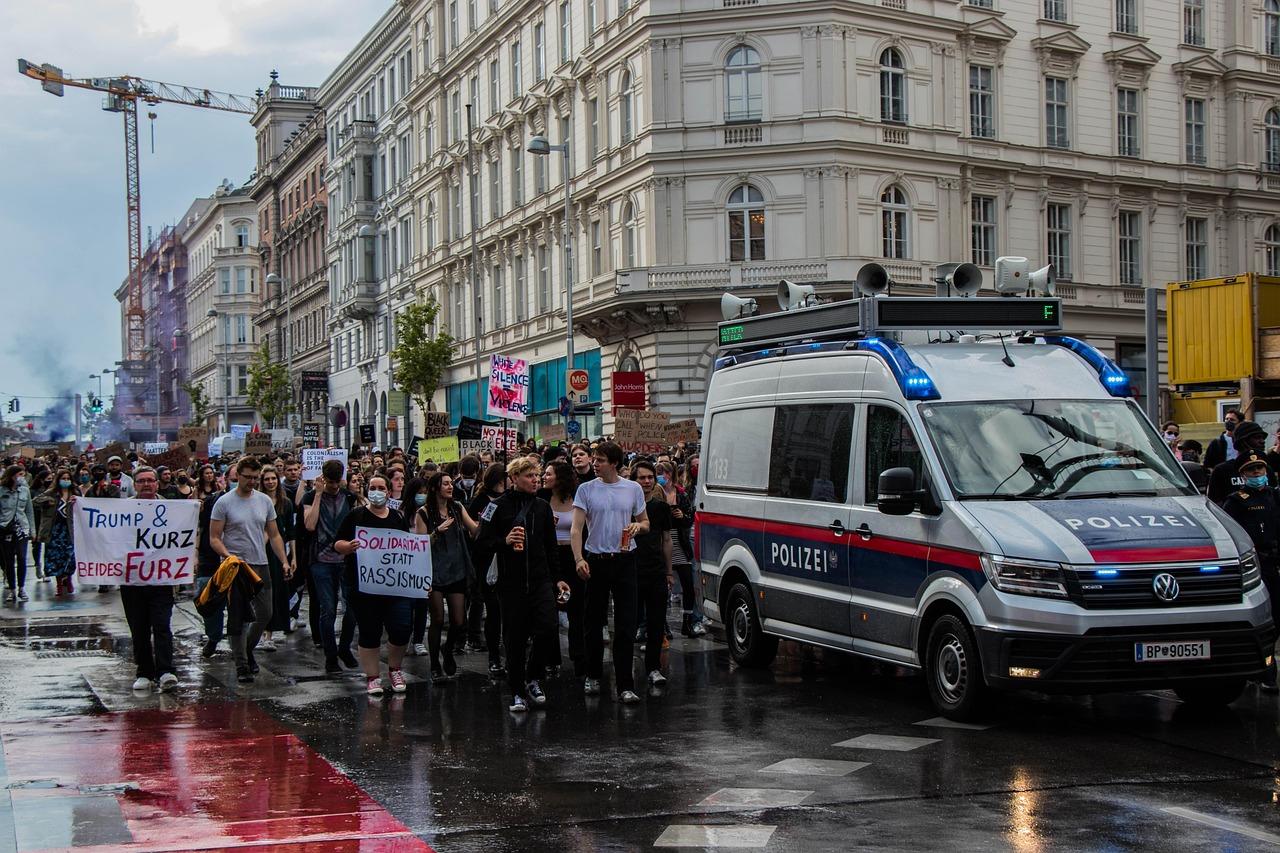
Hundreds of thousands of demonstrators have marched across France for two months over underfunded schools, the cost of living and police brutality, and the government is accused of turning an anti-terror law born of the 2015 Paris attacks against them. Interior Minister Laurent Nuñez told lawmakers on November 3 that he had signed "more than a hundred" MICAS orders related to the protests.
How the orders work
The measure is the MICAS - an "individual measure of administrative control and surveillance" - a legacy of the state of emergency declared in the early hours of November 14, 2015, after France's deadliest terror attacks. Under the 2017 Counter-Terrorism Act, the Interior Ministry may restrict a person's movements when there are "serious reasons" to believe they pose a grave security threat with terrorist ties.
- •Those subject to a MICAS order must report at the police station weekly, daily, or sometimes twice daily
- •Violations carry up to three years in prison and a €45,000 fine
- •The law states the powers exist "solely for the purpose of preventing acts of terrorism from being committed"
- •Decisions rest on intelligence reports and require no prior approval by a judge, though they can be challenged afterwards in court
Who is targeted
After rioting and looting on October 17, the government began barring several dozen people from further demonstrations without prior judicial approval. Those targeted have included students, unionists, far-left activists and environmental campaigners, many with no criminal record. It is the largest such use since the 2024 Paris Olympics, when more than 500 people were ordered to stay home or kept away from venues, and several lost their jobs.
Critics: a 'perversion' of counterterrorism law
Lawyer Aïnoha Pascual, who represents people barred from the October 24 and 31 protests, said the measure crosses a new line: "It's the first time such measures are taken against political activists, by attempting to put a 'terrorist' label on them". She called the practice "a complete perversion of counterterrorism laws".
Jean-Baptiste Soufron of the Association for the Defence of Constitutional Liberties (Adelico) said the orders are deployed in situations with "absolutely no terrorist threat whatsoever". "They clearly target political activists, barring them from attending demonstrations in the hope that this will weaken the protest movement", he said. He added that recent orders were issued at the last minute, effectively making it impossible for a judge to examine them in time.
Nicolas Klausser, a researcher at the Centre Marc Bloch, said the measure effectively allows the Interior Ministry to determine for itself who constitutes a terrorist threat, in place of a judge.
The government's defence and the court fight
Nuñez defended the orders, saying those targeted represented "the upper end of the spectrum" of counterterrorism concern. The Interior Ministry argues the "insurrectionary" nature of the protests amounts to a terror threat, citing the fire that ravaged the town hall of Limoges on October 17 and online calls to target symbols of capitalism and the state.
At a Paris court hearing on Tuesday, the public rapporteur broadly rejected that argument: "Not all violence directed against the state, nor all political violence, is necessarily of a terrorist nature". The calls to protest, the rapporteur said, "cannot be regarded as intended to sow terror, but rather as an expression of intense anger" towards the ruling authorities.
According to Le Canard enchaîné, only "a handful" of those targeted are monitored by counterterrorism services; the rest are "small fry linked to far-left groups". The weekly reported that the idea to deploy MICAS measures against protesters came from Justice Minister Gérald Darmanin, who ordered their mass use as interior minister during the Olympics.
Klausser said the apparent order from above shows the potential to weaponise anti-terror powers for political ends, and that the October 17 violence prompted "a moment of panic", leading the Interior Ministry to explore all options at its disposal.
A wider arsenal against protest
The MICAS orders sit within a broader set of measures critics say curtail the right to protest in France:
- •Outright bans on rallies, changes to protest routes and localised curfews
- •Mass detentions: in the three weeks before October 14, police detained 6,877 people at school blockades and marches, 86 percent of them minors - more than during 18 months of Yellow Vest protests beginning in 2018
- •Lawyers said most detainees were later released without charges, and accused police of abusing minors held up to 48 hours, alleging insults, beatings and depriving them of food and sleep
- •Pascual said police use of "non-lethal" weapons has maimed dozens of protesters and deters others from attending
Marion Ogier, a lawyer for France's Human Rights League (LDH), told a press conference: "The use of such an arsenal, over such a long period, is indicative of a permanent state of emergency".
The government has since suspended the use of MICAS orders against protesters after public outcry, while the legal challenge proceeds before the Paris court.