Friday, November 20, 2026

english

HAUT MONDE

POST

World

• Analysis

Italy passes anti-semitism law enshrining IHRA definition despite free expression concerns

Italy's lower house of parliament gave final approval late on Tuesday to an anti-semitism law, adopted 147 votes to 93, that enshrines the International Holocaust Remembrance Alliance (IHRA) definition of anti-semitism. Critics say the IHRA definition could restrict freedom of expression and advocacy for Palestinian rights.
By Haut Monde Post

• November 18, 2026

• 3 Min Read

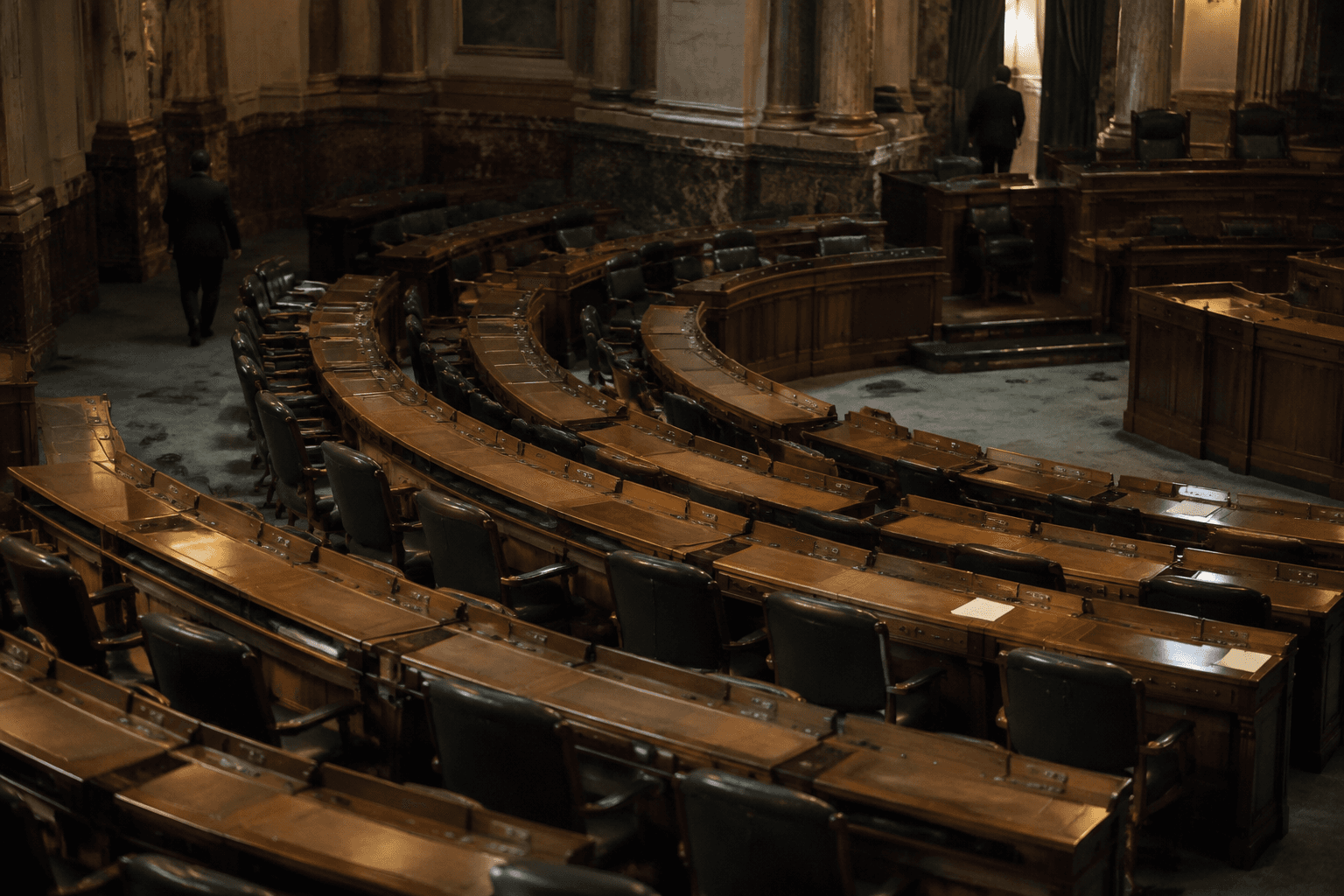
Empty wooden benches in a dim parliament chamber after a late-night vote, a few figures seen from far away near the aisles.

What the law does

The Chamber of Deputies adopted the Italy anti-semitism law late on Tuesday by 147 votes to 93, giving the bill final approval. At its heart is the International Holocaust Remembrance Alliance (IHRA) definition of anti-semitism, which lists some forms of criticism of Israel as examples of anti-semitic conduct.

The law carries no financial penalties and no criminal sanctions for offenders.

A vote over freedom of expression

Opponents argued the measure could have a chilling effect on advocacy for Palestinian rights and on criticism of Israel. Prime Minister Giorgia Meloni's centre-right ruling bloc countered that the law is needed to tackle violence and discrimination, and the governing coalition insisted political criticism would remain fully protected.

Paolo Emilio Russo, of the co-ruling Forza Italia party, rejected the idea that debate would be curbed.

"No one has ever sought to limit freedom of expression and criticism, which is a cornerstone of our democracy."

Angelo Bonelli, co-leader of the Green-Left Alliance (AVS), saw it differently: "The right is exploiting the anti-semitism bill to stifle criticism."

How parliament divided

The left largely rejected the bill, though the vote was not uniform:

  • •A small group of lawmakers from the main opposition Democratic Party (PD) abstained, defying the leadership's call to vote against it.
  • •The PD has condemned violence in Gaza but has not accused Israel of genocide, unlike its allies the Five Star Movement and AVS, both of which level that allegation, which Israel rejects.
  • •Opposition parties repeatedly urged the government to amend the IHRA definition of anti-semitism; the appeals went unheeded.

Rising antisemitic incidents

The vote came amid a surge in pro-Palestinian activism since the Gaza war began following the Hamas-led attacks on Israel on October 7, 2023. Left-wing parties have broadly backed the pro-Palestinian movements, while Meloni's government has accused some protesters of fomenting disorder.

Italy's Antisemitism Observatory, a research unit of Milan's Jewish Contemporary Documentation Centre (CDEC), recorded 963 antisemitic incidents in 2025, almost four times the number reported in 2022. CDEC director Gadi Luzzatto Voghera said the centre recorded 18 cases in 2025 and 10 in the first six months of the current year, involving people being shoved, spat at or slapped.

Livia Ottolenghi, president of the Union of Italian Jewish Communities (UCEI), welcomed the law's passage. In a statement, she described the legislation as something that would reinforce the capacity of Italian civil society to resist hatred, and wrote that countering anti-semitism concerns everyone rather than any single political camp, and so should not be tied to party positions.

The law now stands approved with no penalties attached, and the opposition's push to change the definition has gone unanswered.


HAUT MONDE POST

Independent journalism of the highest standard. A chronicle of world culture, politics, arts, and public thought.

Publication

AboutEditorial

Newsletter

Get the best Haut Monde Post content delivered to your inbox every week.

© 2026 Haut Monde Post. All rights reserved. Digital edition hautmondepost.com.

Friday, Nov 20, 2026

english

World

• Analysis

Italy passes anti-semitism law enshrining IHRA definition despite free expression concerns

Italy's lower house of parliament gave final approval late on Tuesday to an anti-semitism law, adopted 147 votes to 93, that enshrines the International Holocaust Remembrance Alliance (IHRA) definition of anti-semitism. Critics say the IHRA definition could restrict freedom of expression and advocacy for Palestinian rights.

By Haut Monde Post

Nov 18, 2026 • 3 Min Read
Empty wooden benches in a dim parliament chamber after a late-night vote, a few figures seen from far away near the aisles.

What the law does

The Chamber of Deputies adopted the Italy anti-semitism law late on Tuesday by 147 votes to 93, giving the bill final approval. At its heart is the International Holocaust Remembrance Alliance (IHRA) definition of anti-semitism, which lists some forms of criticism of Israel as examples of anti-semitic conduct.

The law carries no financial penalties and no criminal sanctions for offenders.

A vote over freedom of expression

Opponents argued the measure could have a chilling effect on advocacy for Palestinian rights and on criticism of Israel. Prime Minister Giorgia Meloni's centre-right ruling bloc countered that the law is needed to tackle violence and discrimination, and the governing coalition insisted political criticism would remain fully protected.

Paolo Emilio Russo, of the co-ruling Forza Italia party, rejected the idea that debate would be curbed.

"No one has ever sought to limit freedom of expression and criticism, which is a cornerstone of our democracy."

Angelo Bonelli, co-leader of the Green-Left Alliance (AVS), saw it differently: "The right is exploiting the anti-semitism bill to stifle criticism."

How parliament divided

The left largely rejected the bill, though the vote was not uniform:

  • •A small group of lawmakers from the main opposition Democratic Party (PD) abstained, defying the leadership's call to vote against it.
  • •The PD has condemned violence in Gaza but has not accused Israel of genocide, unlike its allies the Five Star Movement and AVS, both of which level that allegation, which Israel rejects.
  • •Opposition parties repeatedly urged the government to amend the IHRA definition of anti-semitism; the appeals went unheeded.

Rising antisemitic incidents

The vote came amid a surge in pro-Palestinian activism since the Gaza war began following the Hamas-led attacks on Israel on October 7, 2023. Left-wing parties have broadly backed the pro-Palestinian movements, while Meloni's government has accused some protesters of fomenting disorder.

Italy's Antisemitism Observatory, a research unit of Milan's Jewish Contemporary Documentation Centre (CDEC), recorded 963 antisemitic incidents in 2025, almost four times the number reported in 2022. CDEC director Gadi Luzzatto Voghera said the centre recorded 18 cases in 2025 and 10 in the first six months of the current year, involving people being shoved, spat at or slapped.

Livia Ottolenghi, president of the Union of Italian Jewish Communities (UCEI), welcomed the law's passage. In a statement, she described the legislation as something that would reinforce the capacity of Italian civil society to resist hatred, and wrote that countering anti-semitism concerns everyone rather than any single political camp, and so should not be tied to party positions.

The law now stands approved with no penalties attached, and the opposition's push to change the definition has gone unanswered.

HAUT MONDE POST

Independent journalism of the highest standard. A chronicle of world culture, politics, arts, and public thought. Published and printed daily in Paris, France.

Publication

AboutEditorial

Newsletter

Get the best Haut Monde Post content delivered to your inbox every week.

© 2026 Haut Monde Post. All rights reserved. Digital edition hautmondepost.com. Published in Paris.

Friday, Nov 20, 2026

english

World

• Analysis

Italy passes anti-semitism law enshrining IHRA definition despite free expression concerns

Italy's lower house of parliament gave final approval late on Tuesday to an anti-semitism law, adopted 147 votes to 93, that enshrines the International Holocaust Remembrance Alliance (IHRA) definition of anti-semitism. Critics say the IHRA definition could restrict freedom of expression and advocacy for Palestinian rights.

By Haut Monde Post

Empty wooden benches in a dim parliament chamber after a late-night vote, a few figures seen from far away near the aisles.

What the law does

The Chamber of Deputies adopted the Italy anti-semitism law late on Tuesday by 147 votes to 93, giving the bill final approval. At its heart is the International Holocaust Remembrance Alliance (IHRA) definition of anti-semitism, which lists some forms of criticism of Israel as examples of anti-semitic conduct.

The law carries no financial penalties and no criminal sanctions for offenders.

A vote over freedom of expression

Opponents argued the measure could have a chilling effect on advocacy for Palestinian rights and on criticism of Israel. Prime Minister Giorgia Meloni's centre-right ruling bloc countered that the law is needed to tackle violence and discrimination, and the governing coalition insisted political criticism would remain fully protected.

Paolo Emilio Russo, of the co-ruling Forza Italia party, rejected the idea that debate would be curbed.

"No one has ever sought to limit freedom of expression and criticism, which is a cornerstone of our democracy."

Angelo Bonelli, co-leader of the Green-Left Alliance (AVS), saw it differently: "The right is exploiting the anti-semitism bill to stifle criticism."

How parliament divided

The left largely rejected the bill, though the vote was not uniform:

  • •A small group of lawmakers from the main opposition Democratic Party (PD) abstained, defying the leadership's call to vote against it.
  • •The PD has condemned violence in Gaza but has not accused Israel of genocide, unlike its allies the Five Star Movement and AVS, both of which level that allegation, which Israel rejects.
  • •Opposition parties repeatedly urged the government to amend the IHRA definition of anti-semitism; the appeals went unheeded.

Rising antisemitic incidents

The vote came amid a surge in pro-Palestinian activism since the Gaza war began following the Hamas-led attacks on Israel on October 7, 2023. Left-wing parties have broadly backed the pro-Palestinian movements, while Meloni's government has accused some protesters of fomenting disorder.

Italy's Antisemitism Observatory, a research unit of Milan's Jewish Contemporary Documentation Centre (CDEC), recorded 963 antisemitic incidents in 2025, almost four times the number reported in 2022. CDEC director Gadi Luzzatto Voghera said the centre recorded 18 cases in 2025 and 10 in the first six months of the current year, involving people being shoved, spat at or slapped.

Livia Ottolenghi, president of the Union of Italian Jewish Communities (UCEI), welcomed the law's passage. In a statement, she described the legislation as something that would reinforce the capacity of Italian civil society to resist hatred, and wrote that countering anti-semitism concerns everyone rather than any single political camp, and so should not be tied to party positions.

The law now stands approved with no penalties attached, and the opposition's push to change the definition has gone unanswered.