Sunday, October 4, 2026

english

HAUT MONDE

POST

World

• Analysis

Friedrich Merz Kyiv visit begins unannounced as Russia strikes North Bridge

German chancellor Friedrich Merz's unannounced Kyiv visit began on the morning of 4 October 2026, with the chancellor arriving by train shortly before Russian forces struck the city's North Bridge, about a 20-minute drive from the station where he pulled in. Sirens rang out across the capital and smoke was still rising from the Dnieper River bridge.

By Haut Monde Post

• October 4, 2026

• 4 Min Read
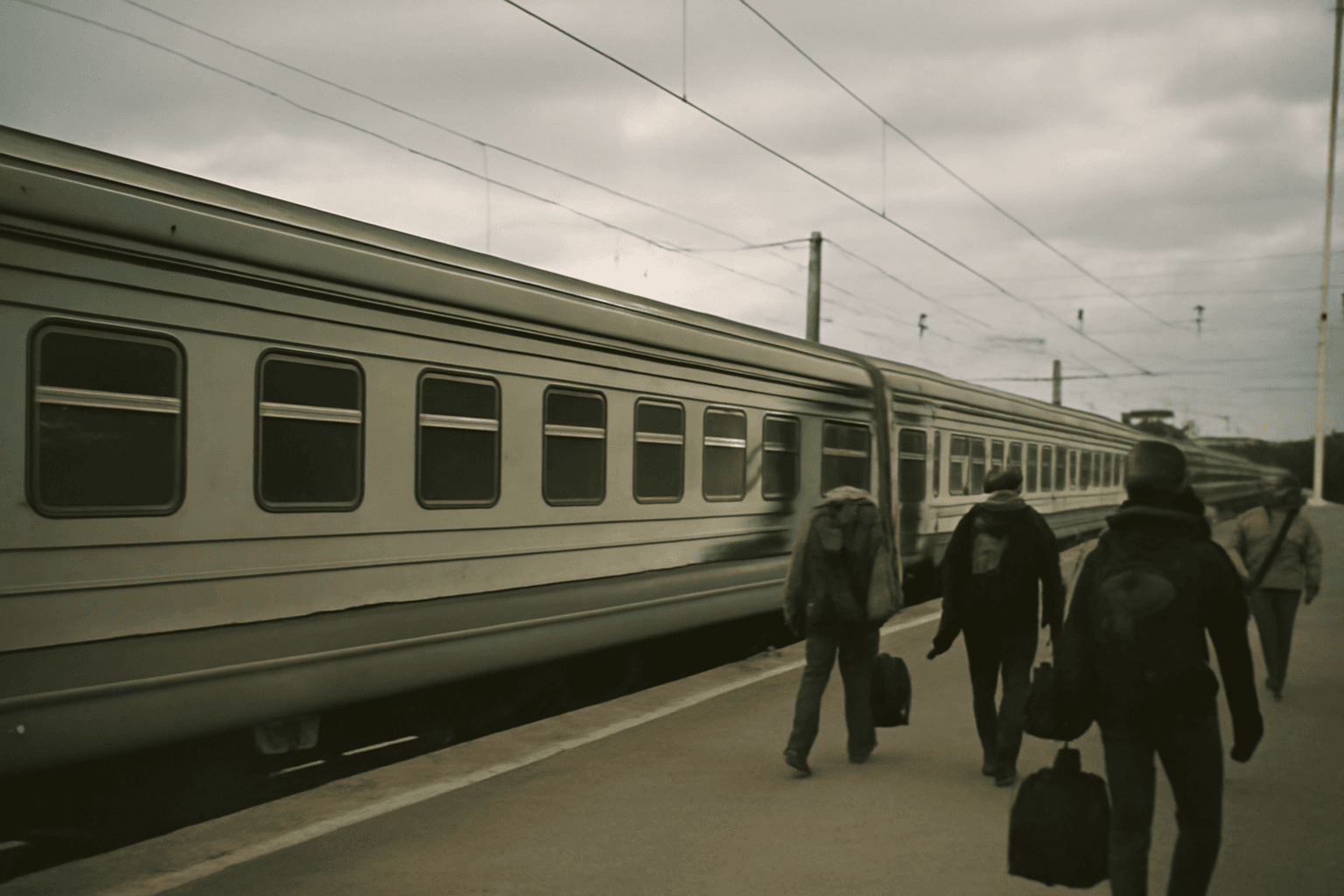
A passenger train waits at a station platform while travellers with bags walk past it under an overcast sky.

German chancellor Friedrich Merz's unannounced Kyiv visit began on the morning of 4 October 2026, with the chancellor arriving by train shortly before Russian forces struck the city's North Bridge, about a 20-minute drive from the station where he pulled in. Sirens rang out across the capital and smoke was still rising from the Dnieper River bridge.

A strike minutes from the station

Merz arrived in Kyiv on the morning of 4 October 2026 in an unannounced visit, pulling into the capital's central railway station as one of Ukraine's strongest European backers. Soon afterwards, Russian forces struck the city's North Bridge, about a 20-minute drive from the station where the chancellor had arrived.

Sirens rang out across Kyiv and smoke could still be seen rising from the Dnieper River bridge. President Volodymyr Zelenskyy confirmed that the morning strike on the North Bridge, also called the Pivnichnyi Bridge, had been carried out by a drone. The day before the chancellor's arrival, Russian drones struck another bridge in the capital, causing injuries.

Zelenskyy thanks Merz and points to coming agreements

Ukraine's foreign minister, Andrii Sybiha, greeted the chancellor at the station. Within the past hour, Zelenskyy had been posting about the strikes and the visit, thanking Merz for his support and describing him as a leader whose country consistently demonstrates leadership in protecting Ukrainian lives from Russian strikes. Zelenskyy said Ukraine was that day preparing decisions to give it, and all of Europe, greater capabilities to defend itself.

Zelenskyy posted:

"There will be important agreements between Ukraine and Germany. Russia must be stopped together."

Merz and Zelenskyy then toured the National Academy of Sciences, which was struck in a daytime attack on Monday that killed two people. The chancellor and his delegation assessed the damage and debris outside the 19th-century building, which stands in the heart of Kyiv close to the German embassy, the National Opera, St Volodymyr's Cathedral and several government buildings. Sybiha that week accused Russia of cynicism for targeting a scientific institution during the working day.

135 drones overnight across six regions

Zelenskyy said Russia launched 135 attack drones against Ukraine overnight, more than 50 of them jet-powered. The Kyiv, Dnipro, Kharkiv, Donetsk, Sumy and Zaporizhzhia regions came under attack, and at least one person was killed in strikes on Kyiv, Kharkiv, Sumy, Dnipro, Donetsk and Zaporizhzhia.

  • •Zelenskyy reported a drone attack on a pharmaceutical warehouse in Sumy that killed one person.
  • •He also reported a strike on a communications facility in Dnipro.
  • •Zelenskyy said the main targets of the Russian attacks were, as always, ordinary residential buildings and critical infrastructure.

The overnight assault came on top of what Zelenskyy called a week in which Russia used more than 1,900 attack drones, 1,700 aerial bombs and 25 missiles against Ukraine. More than 800 of those drones were jet-powered, he said, and Russia must be held accountable for the escalation.

A capital steeling for a hard winter

The visit came to a capital where the Kremlin has stepped up attacks this year and Ukrainians say they are bracing for another autumn blitz ahead of a hard winter. Over the past week, Russian missiles and drones struck offices, datacentres, a school, a hospital and one of Kyiv's main bridges. Moscow has begun targeting the energy system, hitting a thermal power plant and other facilities and leaving several neighbourhoods without power and water by morning.

Kyiv's mayor, Vitali Klitschko, said on Friday that the capital is in a very dramatic situation and that it is no longer possible to pretend residents can live as in peacetime. He added:

"The enemy is tearing Kyiv apart."

Zelenskyy said Russia wants Ukrainians to leave the capital and show that without it there is no country. Kyiv faces an acute shortage of Patriot interceptors for ballistic missiles and faster jet-powered drones that are harder to shoot down; interceptor drones are being fast-tracked, but scaling them up could take weeks or months, three defence industry sources said. Western diplomats publicly intend to remain, though two senior diplomats said contingency plans were being drawn up to relocate embassies to Lviv or eastern Poland if Russia began targeting foreign missions.

Merz's visit was continuing after the stop at the academy, with the agreements Zelenskyy promised between Ukraine and Germany still to come.

Sunday, Oct 4, 2026

english

World

• Analysis

Friedrich Merz Kyiv visit begins unannounced as Russia strikes North Bridge

German chancellor Friedrich Merz's unannounced Kyiv visit began on the morning of 4 October 2026, with the chancellor arriving by train shortly before Russian forces struck the city's North Bridge, about a 20-minute drive from the station where he pulled in. Sirens rang out across the capital and smoke was still rising from the Dnieper River bridge.

By Haut Monde Post

Oct 4, 2026 • 4 Min Read

A passenger train waits at a station platform while travellers with bags walk past it under an overcast sky.

German chancellor Friedrich Merz's unannounced Kyiv visit began on the morning of 4 October 2026, with the chancellor arriving by train shortly before Russian forces struck the city's North Bridge, about a 20-minute drive from the station where he pulled in. Sirens rang out across the capital and smoke was still rising from the Dnieper River bridge.

A strike minutes from the station

Merz arrived in Kyiv on the morning of 4 October 2026 in an unannounced visit, pulling into the capital's central railway station as one of Ukraine's strongest European backers. Soon afterwards, Russian forces struck the city's North Bridge, about a 20-minute drive from the station where the chancellor had arrived.

Sirens rang out across Kyiv and smoke could still be seen rising from the Dnieper River bridge. President Volodymyr Zelenskyy confirmed that the morning strike on the North Bridge, also called the Pivnichnyi Bridge, had been carried out by a drone. The day before the chancellor's arrival, Russian drones struck another bridge in the capital, causing injuries.

Zelenskyy thanks Merz and points to coming agreements

Ukraine's foreign minister, Andrii Sybiha, greeted the chancellor at the station. Within the past hour, Zelenskyy had been posting about the strikes and the visit, thanking Merz for his support and describing him as a leader whose country consistently demonstrates leadership in protecting Ukrainian lives from Russian strikes. Zelenskyy said Ukraine was that day preparing decisions to give it, and all of Europe, greater capabilities to defend itself.

Zelenskyy posted:

"There will be important agreements between Ukraine and Germany. Russia must be stopped together."

Merz and Zelenskyy then toured the National Academy of Sciences, which was struck in a daytime attack on Monday that killed two people. The chancellor and his delegation assessed the damage and debris outside the 19th-century building, which stands in the heart of Kyiv close to the German embassy, the National Opera, St Volodymyr's Cathedral and several government buildings. Sybiha that week accused Russia of cynicism for targeting a scientific institution during the working day.

135 drones overnight across six regions

Zelenskyy said Russia launched 135 attack drones against Ukraine overnight, more than 50 of them jet-powered. The Kyiv, Dnipro, Kharkiv, Donetsk, Sumy and Zaporizhzhia regions came under attack, and at least one person was killed in strikes on Kyiv, Kharkiv, Sumy, Dnipro, Donetsk and Zaporizhzhia.

  • •Zelenskyy reported a drone attack on a pharmaceutical warehouse in Sumy that killed one person.
  • •He also reported a strike on a communications facility in Dnipro.
  • •Zelenskyy said the main targets of the Russian attacks were, as always, ordinary residential buildings and critical infrastructure.

The overnight assault came on top of what Zelenskyy called a week in which Russia used more than 1,900 attack drones, 1,700 aerial bombs and 25 missiles against Ukraine. More than 800 of those drones were jet-powered, he said, and Russia must be held accountable for the escalation.

A capital steeling for a hard winter

The visit came to a capital where the Kremlin has stepped up attacks this year and Ukrainians say they are bracing for another autumn blitz ahead of a hard winter. Over the past week, Russian missiles and drones struck offices, datacentres, a school, a hospital and one of Kyiv's main bridges. Moscow has begun targeting the energy system, hitting a thermal power plant and other facilities and leaving several neighbourhoods without power and water by morning.

Kyiv's mayor, Vitali Klitschko, said on Friday that the capital is in a very dramatic situation and that it is no longer possible to pretend residents can live as in peacetime. He added:

"The enemy is tearing Kyiv apart."

Zelenskyy said Russia wants Ukrainians to leave the capital and show that without it there is no country. Kyiv faces an acute shortage of Patriot interceptors for ballistic missiles and faster jet-powered drones that are harder to shoot down; interceptor drones are being fast-tracked, but scaling them up could take weeks or months, three defence industry sources said. Western diplomats publicly intend to remain, though two senior diplomats said contingency plans were being drawn up to relocate embassies to Lviv or eastern Poland if Russia began targeting foreign missions.

Merz's visit was continuing after the stop at the academy, with the agreements Zelenskyy promised between Ukraine and Germany still to come.
Sunday, Oct 4, 2026

english

World

• Analysis

Friedrich Merz Kyiv visit begins unannounced as Russia strikes North Bridge

German chancellor Friedrich Merz's unannounced Kyiv visit began on the morning of 4 October 2026, with the chancellor arriving by train shortly before Russian forces struck the city's North Bridge, about a 20-minute drive from the station where he pulled in. Sirens rang out across the capital and smoke was still rising from the Dnieper River bridge.

By Haut Monde Post

Oct 4, 2026 • 4 Min Read

A passenger train waits at a station platform while travellers with bags walk past it under an overcast sky.

German chancellor Friedrich Merz's unannounced Kyiv visit began on the morning of 4 October 2026, with the chancellor arriving by train shortly before Russian forces struck the city's North Bridge, about a 20-minute drive from the station where he pulled in. Sirens rang out across the capital and smoke was still rising from the Dnieper River bridge.

A strike minutes from the station

Merz arrived in Kyiv on the morning of 4 October 2026 in an unannounced visit, pulling into the capital's central railway station as one of Ukraine's strongest European backers. Soon afterwards, Russian forces struck the city's North Bridge, about a 20-minute drive from the station where the chancellor had arrived.

Sirens rang out across Kyiv and smoke could still be seen rising from the Dnieper River bridge. President Volodymyr Zelenskyy confirmed that the morning strike on the North Bridge, also called the Pivnichnyi Bridge, had been carried out by a drone. The day before the chancellor's arrival, Russian drones struck another bridge in the capital, causing injuries.

Zelenskyy thanks Merz and points to coming agreements

Ukraine's foreign minister, Andrii Sybiha, greeted the chancellor at the station. Within the past hour, Zelenskyy had been posting about the strikes and the visit, thanking Merz for his support and describing him as a leader whose country consistently demonstrates leadership in protecting Ukrainian lives from Russian strikes. Zelenskyy said Ukraine was that day preparing decisions to give it, and all of Europe, greater capabilities to defend itself.

Zelenskyy posted:

"There will be important agreements between Ukraine and Germany. Russia must be stopped together."

Merz and Zelenskyy then toured the National Academy of Sciences, which was struck in a daytime attack on Monday that killed two people. The chancellor and his delegation assessed the damage and debris outside the 19th-century building, which stands in the heart of Kyiv close to the German embassy, the National Opera, St Volodymyr's Cathedral and several government buildings. Sybiha that week accused Russia of cynicism for targeting a scientific institution during the working day.

135 drones overnight across six regions

Zelenskyy said Russia launched 135 attack drones against Ukraine overnight, more than 50 of them jet-powered. The Kyiv, Dnipro, Kharkiv, Donetsk, Sumy and Zaporizhzhia regions came under attack, and at least one person was killed in strikes on Kyiv, Kharkiv, Sumy, Dnipro, Donetsk and Zaporizhzhia.

  • •Zelenskyy reported a drone attack on a pharmaceutical warehouse in Sumy that killed one person.
  • •He also reported a strike on a communications facility in Dnipro.
  • •Zelenskyy said the main targets of the Russian attacks were, as always, ordinary residential buildings and critical infrastructure.

The overnight assault came on top of what Zelenskyy called a week in which Russia used more than 1,900 attack drones, 1,700 aerial bombs and 25 missiles against Ukraine. More than 800 of those drones were jet-powered, he said, and Russia must be held accountable for the escalation.

A capital steeling for a hard winter

The visit came to a capital where the Kremlin has stepped up attacks this year and Ukrainians say they are bracing for another autumn blitz ahead of a hard winter. Over the past week, Russian missiles and drones struck offices, datacentres, a school, a hospital and one of Kyiv's main bridges. Moscow has begun targeting the energy system, hitting a thermal power plant and other facilities and leaving several neighbourhoods without power and water by morning.

Kyiv's mayor, Vitali Klitschko, said on Friday that the capital is in a very dramatic situation and that it is no longer possible to pretend residents can live as in peacetime. He added:

"The enemy is tearing Kyiv apart."

Zelenskyy said Russia wants Ukrainians to leave the capital and show that without it there is no country. Kyiv faces an acute shortage of Patriot interceptors for ballistic missiles and faster jet-powered drones that are harder to shoot down; interceptor drones are being fast-tracked, but scaling them up could take weeks or months, three defence industry sources said. Western diplomats publicly intend to remain, though two senior diplomats said contingency plans were being drawn up to relocate embassies to Lviv or eastern Poland if Russia began targeting foreign missions.

Merz's visit was continuing after the stop at the academy, with the agreements Zelenskyy promised between Ukraine and Germany still to come.