Tuesday, October 20, 2026

english

HAUT MONDE

POST

Politics

• Analysis

Police Violence in France: Why Heavy-Handed Protest Policing Persists

Images of teargas and baton charges in Paris have renewed global attention to police violence in France, whose forces respond to street movements with force that most western European neighbours avoid. The model has survived decades of condemnation and now faces a new challenge: a proposed police self-defence law.

By Haut Monde Post

• October 20, 2026

• 4 Min Read
Police Violence in France: Why Heavy-Handed Protest Policing Persists

A Model Rooted in Napoleon's State

French protest policing is not an accident of one government or one interior minister. Its logic goes back to Napoleon's ultra-centralised state, in which the police exist as an instrument of the state itself, charged with protecting it and keeping public order. Within that framework, protests, blockades and mass disorder are treated as direct challenges to the authority of the republic - so the priority is to reclaim the streets, not to negotiate.

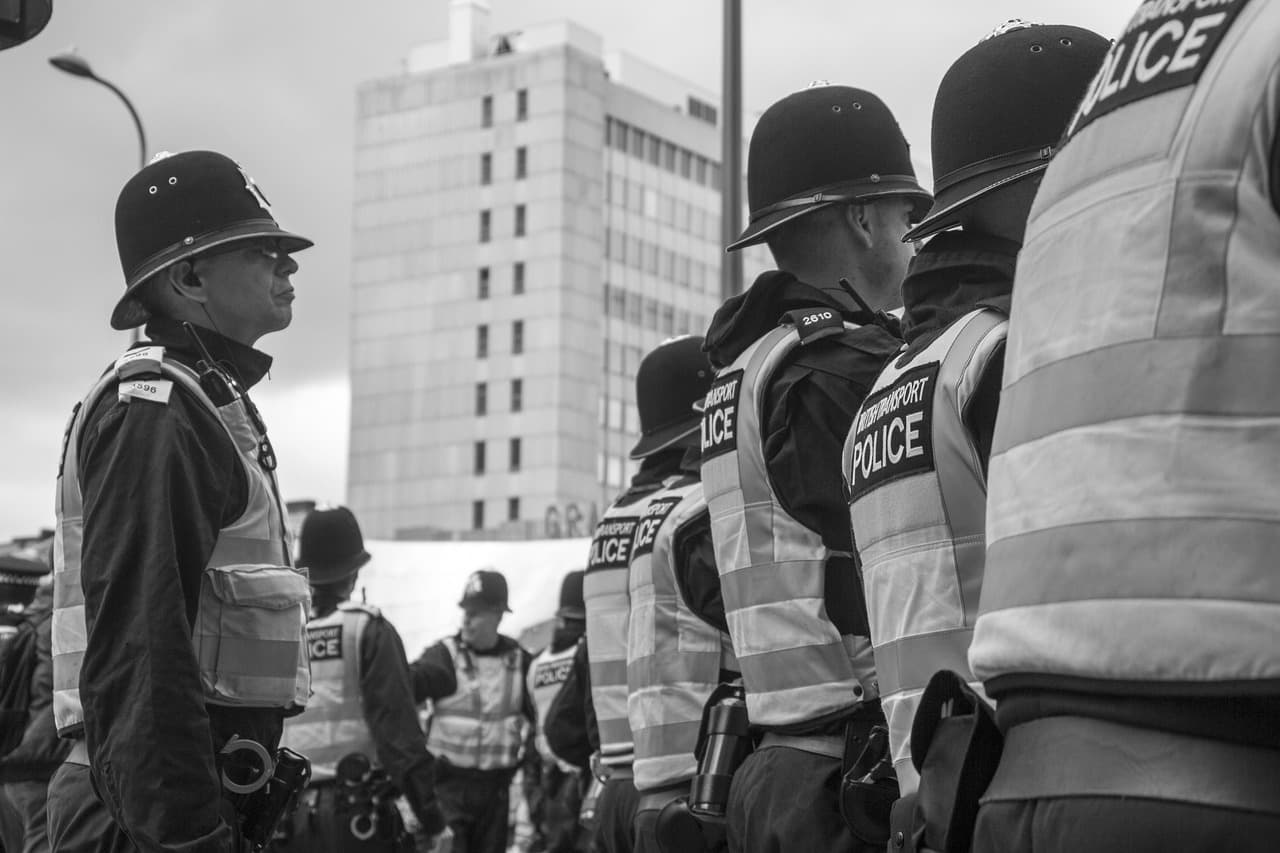
The contrast with Britain is stark. Since the early 1800s, British policing has been built on the idea that officers are servants of the public whose authority derives from public consent. Most of France's western European neighbours now prioritise containment and de-escalation; France, by contrast, has long met social movements that take to the streets with force that can be startling to watch.

The Weapons on Paris Streets

The tools of French crowd control explain why the images from Paris have circulated so widely. Officers routinely encircle and trap crowds, and they continue to use less-than-lethal weapons that are banned or heavily restricted elsewhere in Europe. Among them:

  • •Defence ball launchers, which fire rubber projectiles at 185mph (300kph)
  • •Pyrotechnic stun grenades producing a 160dB acoustic shock, which have caused injuries including lost eyes and teeth, fractured jaws and several amputated limbs
  • •Teargas and baton charges, now the familiar backdrop to large demonstrations

One thing has changed since the gilets jaunes crackdown era. The explosive grenades that injured protesters in the late 2010s, and killed an environmental protester in 2014, have been phased out and replaced by the stun grenades in use today.

A Street Culture Governments Cannot Ignore

The confrontation has deep roots on both sides. France's insurrectionary tradition dates back to the 1789 revolution, and protesters know the street can - and generally does - force governments to back down. Protest is a civic duty and a legitimate democratic tool, one of the few means citizens have of forcing concessions. Unions, unlike their counterparts in Germany or the Netherlands, are not formal negotiating partners, and the Fifth Republic's presidential structure leaves little room for institutional consultation.

The result is a recurring cycle. Authorities see large crowds as an existential threat and send in the police; military-style tactics alienate peaceful demonstrators; radical groups turn violent; and police answer with baton charges and munitions.

Data from Acled complicates the picture of a nation permanently on strike. France does not always record western Europe's highest number of demonstrations - Germany and Italy also vie for that title. What France does consistently lead on is escalated, high-intensity unrest: barricades, vandalism, looting, arson and confrontations with police.

Condemnation and the 'Licence to Kill' Law

The French model has for decades drawn condemnation from Amnesty International, Human Rights Watch and the Council of Europe. Reports have documented excessive force, misuse of grenades and rubber bullets, arbitrary mass arrests and routine teargas deployment against largely non-violent protesters. Yet the approach persists - and is expanding.

a legal "presumption of self-defence" for police officers and gendarmes

That expansion now takes the form of a proposed law. Last month, thousands marched against the "licence to kill" bill, which would establish a presumption of self-defence for officers and gendarmes who fire weapons in the line of duty. Opposed by civil rights groups, leftwing politicians, the magistrates' union and the UN, it would shift the burden of proof on to victims to show a shooting was disproportionate. Critics argue it would institutionalise police impunity and reinforce a security culture treating dissent as insurrection to be repressed.

HAUT MONDE POST

Independent journalism of the highest standard. A chronicle of world culture, politics, arts, and public thought.

Publication

AboutEditorial

Newsletter

Get the best Haut Monde Post content delivered to your inbox every week.

© 2026 Haut Monde Post. All rights reserved. Digital edition hautmondepost.com.

Tuesday, Oct 20, 2026

english

Politics

• Analysis

Police Violence in France: Why Heavy-Handed Protest Policing Persists

Images of teargas and baton charges in Paris have renewed global attention to police violence in France, whose forces respond to street movements with force that most western European neighbours avoid. The model has survived decades of condemnation and now faces a new challenge: a proposed police self-defence law.

By Haut Monde Post

Oct 20, 2026 • 4 Min Read

Police Violence in France: Why Heavy-Handed Protest Policing Persists

A Model Rooted in Napoleon's State

French protest policing is not an accident of one government or one interior minister. Its logic goes back to Napoleon's ultra-centralised state, in which the police exist as an instrument of the state itself, charged with protecting it and keeping public order. Within that framework, protests, blockades and mass disorder are treated as direct challenges to the authority of the republic - so the priority is to reclaim the streets, not to negotiate.

The contrast with Britain is stark. Since the early 1800s, British policing has been built on the idea that officers are servants of the public whose authority derives from public consent. Most of France's western European neighbours now prioritise containment and de-escalation; France, by contrast, has long met social movements that take to the streets with force that can be startling to watch.

The Weapons on Paris Streets

The tools of French crowd control explain why the images from Paris have circulated so widely. Officers routinely encircle and trap crowds, and they continue to use less-than-lethal weapons that are banned or heavily restricted elsewhere in Europe. Among them:

  • •Defence ball launchers, which fire rubber projectiles at 185mph (300kph)
  • •Pyrotechnic stun grenades producing a 160dB acoustic shock, which have caused injuries including lost eyes and teeth, fractured jaws and several amputated limbs
  • •Teargas and baton charges, now the familiar backdrop to large demonstrations

One thing has changed since the gilets jaunes crackdown era. The explosive grenades that injured protesters in the late 2010s, and killed an environmental protester in 2014, have been phased out and replaced by the stun grenades in use today.

A Street Culture Governments Cannot Ignore

The confrontation has deep roots on both sides. France's insurrectionary tradition dates back to the 1789 revolution, and protesters know the street can - and generally does - force governments to back down. Protest is a civic duty and a legitimate democratic tool, one of the few means citizens have of forcing concessions. Unions, unlike their counterparts in Germany or the Netherlands, are not formal negotiating partners, and the Fifth Republic's presidential structure leaves little room for institutional consultation.

The result is a recurring cycle. Authorities see large crowds as an existential threat and send in the police; military-style tactics alienate peaceful demonstrators; radical groups turn violent; and police answer with baton charges and munitions.

Data from Acled complicates the picture of a nation permanently on strike. France does not always record western Europe's highest number of demonstrations - Germany and Italy also vie for that title. What France does consistently lead on is escalated, high-intensity unrest: barricades, vandalism, looting, arson and confrontations with police.

Condemnation and the 'Licence to Kill' Law

The French model has for decades drawn condemnation from Amnesty International, Human Rights Watch and the Council of Europe. Reports have documented excessive force, misuse of grenades and rubber bullets, arbitrary mass arrests and routine teargas deployment against largely non-violent protesters. Yet the approach persists - and is expanding.

a legal "presumption of self-defence" for police officers and gendarmes

That expansion now takes the form of a proposed law. Last month, thousands marched against the "licence to kill" bill, which would establish a presumption of self-defence for officers and gendarmes who fire weapons in the line of duty. Opposed by civil rights groups, leftwing politicians, the magistrates' union and the UN, it would shift the burden of proof on to victims to show a shooting was disproportionate. Critics argue it would institutionalise police impunity and reinforce a security culture treating dissent as insurrection to be repressed.
HAUT MONDE POST

Independent journalism of the highest standard. A chronicle of world culture, politics, arts, and public thought. Published and printed daily in Paris, France.

Publication

AboutEditorial

Newsletter

Get the best Haut Monde Post content delivered to your inbox every week.

© 2026 Haut Monde Post. All rights reserved. Digital edition hautmondepost.com. Published in Paris.

Tuesday, Oct 20, 2026

english

Politics

• Analysis

Police Violence in France: Why Heavy-Handed Protest Policing Persists

Images of teargas and baton charges in Paris have renewed global attention to police violence in France, whose forces respond to street movements with force that most western European neighbours avoid. The model has survived decades of condemnation and now faces a new challenge: a proposed police self-defence law.

By Haut Monde Post

Oct 20, 2026 • 4 Min Read

Police Violence in France: Why Heavy-Handed Protest Policing Persists

A Model Rooted in Napoleon's State

French protest policing is not an accident of one government or one interior minister. Its logic goes back to Napoleon's ultra-centralised state, in which the police exist as an instrument of the state itself, charged with protecting it and keeping public order. Within that framework, protests, blockades and mass disorder are treated as direct challenges to the authority of the republic - so the priority is to reclaim the streets, not to negotiate.

The contrast with Britain is stark. Since the early 1800s, British policing has been built on the idea that officers are servants of the public whose authority derives from public consent. Most of France's western European neighbours now prioritise containment and de-escalation; France, by contrast, has long met social movements that take to the streets with force that can be startling to watch.

The Weapons on Paris Streets

The tools of French crowd control explain why the images from Paris have circulated so widely. Officers routinely encircle and trap crowds, and they continue to use less-than-lethal weapons that are banned or heavily restricted elsewhere in Europe. Among them:

  • •Defence ball launchers, which fire rubber projectiles at 185mph (300kph)
  • •Pyrotechnic stun grenades producing a 160dB acoustic shock, which have caused injuries including lost eyes and teeth, fractured jaws and several amputated limbs
  • •Teargas and baton charges, now the familiar backdrop to large demonstrations

One thing has changed since the gilets jaunes crackdown era. The explosive grenades that injured protesters in the late 2010s, and killed an environmental protester in 2014, have been phased out and replaced by the stun grenades in use today.

A Street Culture Governments Cannot Ignore

The confrontation has deep roots on both sides. France's insurrectionary tradition dates back to the 1789 revolution, and protesters know the street can - and generally does - force governments to back down. Protest is a civic duty and a legitimate democratic tool, one of the few means citizens have of forcing concessions. Unions, unlike their counterparts in Germany or the Netherlands, are not formal negotiating partners, and the Fifth Republic's presidential structure leaves little room for institutional consultation.

The result is a recurring cycle. Authorities see large crowds as an existential threat and send in the police; military-style tactics alienate peaceful demonstrators; radical groups turn violent; and police answer with baton charges and munitions.

Data from Acled complicates the picture of a nation permanently on strike. France does not always record western Europe's highest number of demonstrations - Germany and Italy also vie for that title. What France does consistently lead on is escalated, high-intensity unrest: barricades, vandalism, looting, arson and confrontations with police.

Condemnation and the 'Licence to Kill' Law

The French model has for decades drawn condemnation from Amnesty International, Human Rights Watch and the Council of Europe. Reports have documented excessive force, misuse of grenades and rubber bullets, arbitrary mass arrests and routine teargas deployment against largely non-violent protesters. Yet the approach persists - and is expanding.

a legal "presumption of self-defence" for police officers and gendarmes

That expansion now takes the form of a proposed law. Last month, thousands marched against the "licence to kill" bill, which would establish a presumption of self-defence for officers and gendarmes who fire weapons in the line of duty. Opposed by civil rights groups, leftwing politicians, the magistrates' union and the UN, it would shift the burden of proof on to victims to show a shooting was disproportionate. Critics argue it would institutionalise police impunity and reinforce a security culture treating dissent as insurrection to be repressed.