• Analysis
Ukraine support exercise Koalicja to gather 2,800 troops in Poland
About 2,800 troops from 10 European countries will take part in the first exercise of the Multinational Force – Ukraine, held in southeastern Poland from November 9 to 22.
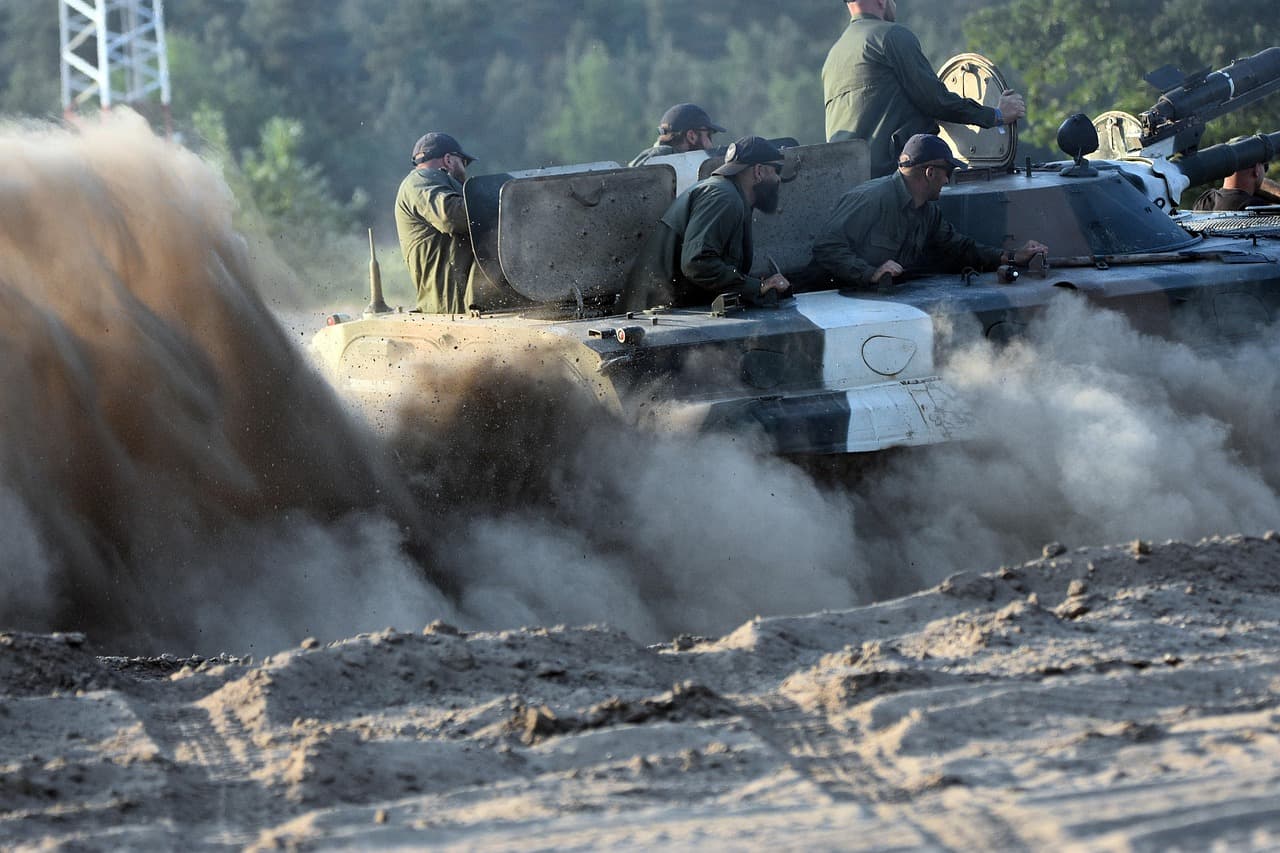
London and Paris announced on Tuesday that around 2,800 troops from 10 European countries will gather in southeastern Poland for the first exercise of the Multinational Force – Ukraine (MNF-U), the France-UK-led force meant to back Kyiv after a potential ceasefire.
What the Koalicja exercise involves
The exercise, dubbed Koalicja ("Coalition" in Polish), runs from November 9 to 22 in southeast Poland not far from the Ukrainian border.
- •France provides the largest contingent of 1,100 troops, with the UK deploying 300 soldiers.
- •Troops from Belgium, Estonia, Germany, France, Lithuania, the Netherlands, Poland, Spain, Sweden and the UK will conduct air and land operations around Nowa Deba, some 100 kilometres (62 miles) west of the Ukrainian border.
- •Turkey will lead a maritime simulation from Istanbul to test preparedness for eventual mine-clearing operations in the Black Sea, but Turkish troops will not join the land exercise in Poland.
What the Multinational Force – Ukraine is for
The MNF-U was set up in 2025 and already has an operational headquarters in Paris. It is not a NATO operation and has little US involvement. According to the joint statement released by the French defence ministry, the force has no offensive mission and is only to be deployed once a ceasefire is agreed to end the war sparked by Russia's full-scale invasion in 2022.
Its stated aims are to support the Ukrainian armed forces, ensure security in Ukrainian skies and allow economic activity to resume in the Black Sea. Britain's Lieutenant General Tom Bateman said the force is not a "peacekeeping or ceasefire monitoring mission" and is not designed for offensive operations, but to reassure Ukraine and support the regeneration of its armed forces to deter or defend against future Russian aggression.
UK Defence Minister Wes Streeting said, according to the UK statement: "This isn't a hypothetical plan, it's a real force, ready to help Ukraine once the fighting stops."
What the exercise will test
The French defence ministry's joint statement said the exercise will allow the testing of the speed and efficiency at which several nations can deploy forces on land, sea and air to support Ukraine once hostilities end. Bateman said it will test coordination arrangements, rehearse the movement of personnel, equipment and supplies, and assess whether the different components can integrate as one multinational force.
French General Armel Dirou, who co-leads the exercise with Bateman, called it a key milestone, serving as a concrete demonstration of the MNF-U's ability to be deployed as soon as hostilities end. According to Dirou, the exercise should work out how the mission would be sent into the field, smoothing out logistical and cultural issues between the participating militaries; he stressed the operation is defensive in character rather than a demonstration of military strength.
Only light equipment, such as drones, is expected to be deployed in Poland for anti-drone and self-defence exercises, rather than heavy weaponry or tanks. The exercise runs until November 22, testing how quickly the multinational force could move once the fighting stops.