• Analysis
UK 'Vehement' Against Slavery Reparations on Commonwealth Summit Agenda, Gonsalves Says
British officials pressed to keep slavery reparations off the agenda of the Commonwealth summit in Antigua and Barbuda, Ralph Gonsalves, former prime minister of St Vincent and the Grenadines, has said, warning reportedly that the UK prime minister would not attend if it were formally listed.
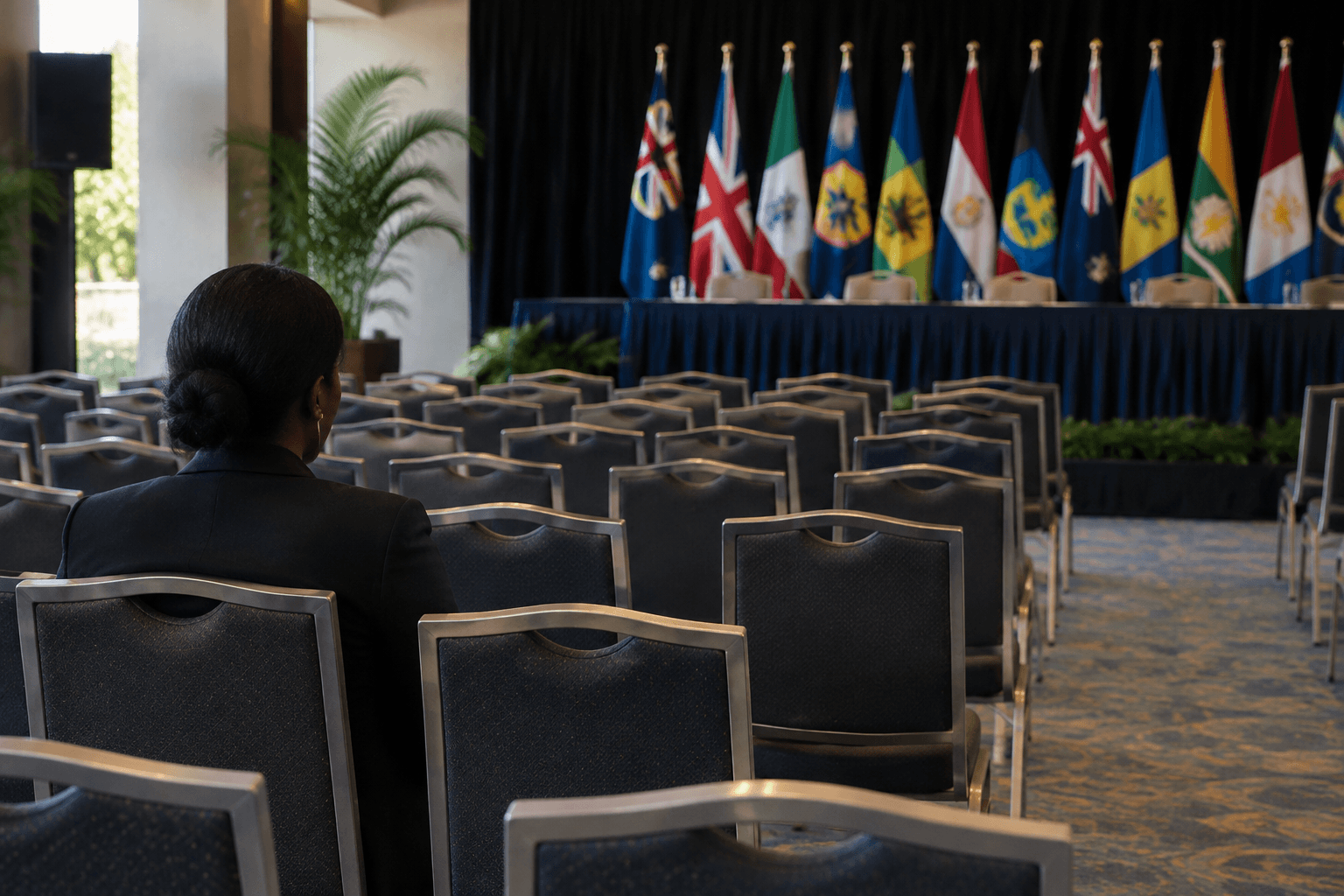
Ralph Gonsalves, a former prime minister of St Vincent and the Grenadines and a senior figure in the reparatory justice movement Repair Campaign, has given a detailed account of how hard Britain worked to keep slavery reparations off the agenda of the Commonwealth summit, where leaders begin meeting on Sunday. The gathering, known as Chogm, opens on the 45th anniversary of Antigua and Barbuda's independence from British colonial rule.
Gonsalves's account of UK pressure
According to Gonsalves, British officials made keeping reparations off the summit agenda a priority, going so far as to link the issue to whether the UK prime minister would show up at all. Drawing on what he called informed circles, he said Britain was vehement that the matter should not appear on the agenda.
"if it is on the agenda the prime minister of Britain wouldn't go"
That blunt warning, he said, came from British and Canadian officials concerned about attendance if the issue were formally listed.
Gonsalves also said British officials circulated a claim about India's position that he described as false. "They also started to circulate this untruth that India didn't want it on the agenda," he said. In his account, India was in fact supportive: "India was very supportive at the UN general assembly resolution on March 25th, 2026".
What is on the official agenda
Slavery reparations is not on the official agenda of the Chogm summit, which begins on Sunday. The Commonwealth is a 56-nation bloc spanning Africa, Asia, the Caribbean and the Americas, the Pacific and Europe.
The stated priorities for the meeting are:
- •trade
- •climate resilience and finance
- •sustainable debt
- •democracy
- •investment in opportunities for young people
Reparatory justice pushed to the fore anyway
Despite its absence from the formal programme, Gonsalves credited Caribbean nations reparations campaigning, amplified by a growing regional and global reparations movement, with pushing reparatory justice to the heart of summit discussion. In his view, the issue has become impossible for British politics to sidestep: "it is an issue which you can't duck any more".
He said the UK was approaching talks in a difficult posture, describing the British government as "coming, kicking and screaming to the table of structured dialogue. But at least they're coming". The format and details of that dialogue, he indicated, were expected to be taken up at the leaders' private retreat rather than at Chogm itself, with the actual structured dialogue unlikely to happen at the summit.
Hilary Beckles, chair of the Caricom Reparations Commission, framed the meeting even more pointedly, calling it "the Chogm of reparations" and saying reparatory justice was "the number one item" for the Caribbean.
No immediate comment from London
Gonsalves's account of the lobbying - the vehemence about the agenda, the attendance warning and the claim about India - stands as his own understanding of events, and the British government has so far not responded to it. There was no immediate comment from the British government.