Saturday, October 10, 2026

english

HAUT MONDE

POST

Politics

• Analysis

Zack Polanski, Green Party Leader, Sees Polls Halve and Approval Sink to -28 After Byelection

Green Party leader Zack Polanski has seen the party's poll ratings fall from highs of 21% to around 10-11% and his own net approval drop to -28, making him the least popular major UK party leader, after losing the Holborn and St Pancras byelection to Labour's Sagal Abdi-Wali.

By Haut Monde Post

• October 10, 2026

• 4 Min Read
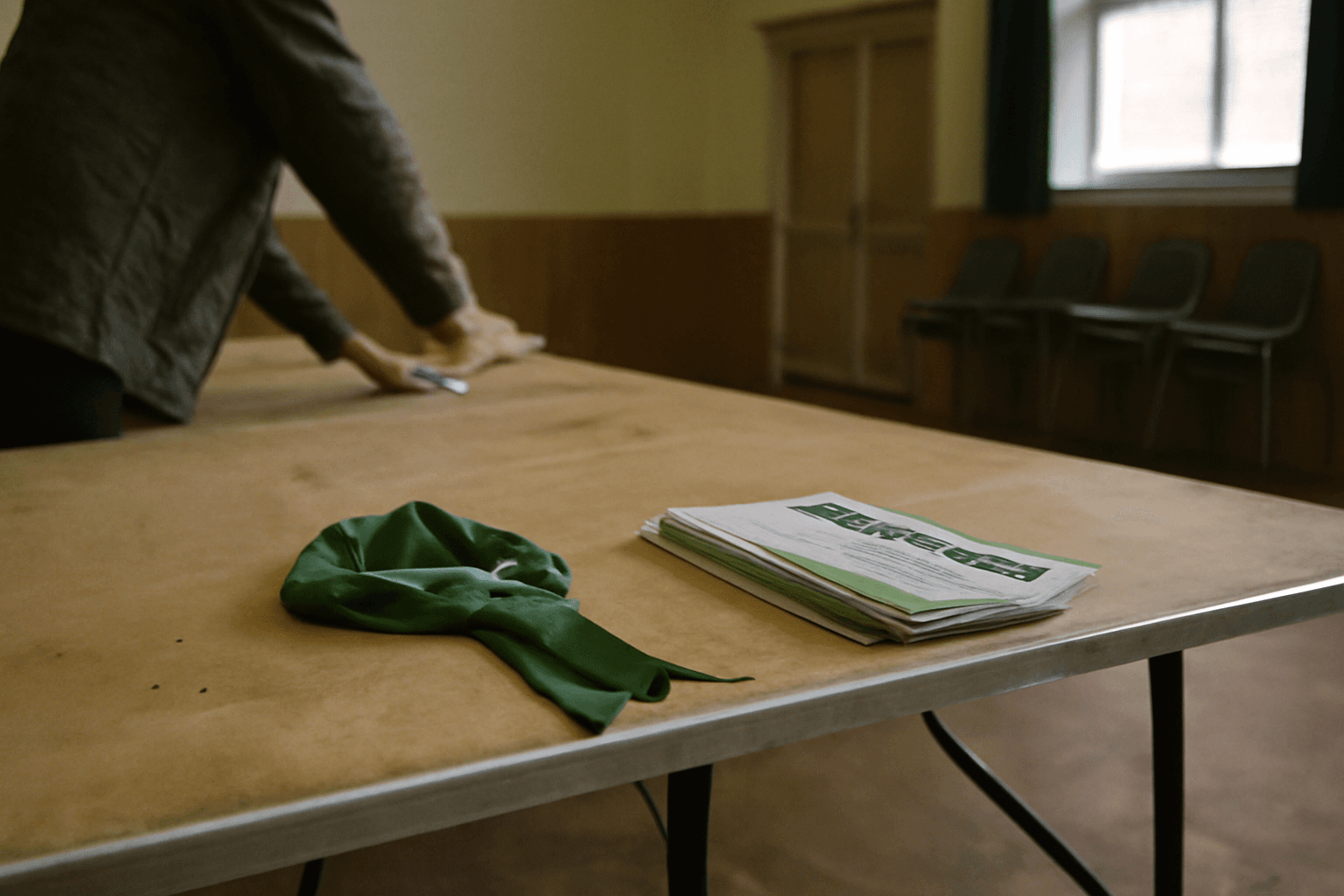
A folded Green Party rosette and leaflets cleared from a trestle table in an empty community hall after polling day.

The numbers behind the Green Party's difficult autumn tell a sharp story. In February, Zack Polanski's party was riding high after taking a Manchester seat from Labour; this week, it has lost the Holborn and St Pancras byelection and its leader's personal ratings have sunk to the bottom of the major-party table.

Polanski's net approval now stands at -28 according to More in Common polling, a fall of four points that leaves him less popular with voters than Nigel Farage and the least popular major UK party leader.

From byelection high to poll slide

The contrast with the spring could hardly be starker. In February, Hannah Spencer won Gorton and Denton in Greater Manchester for the Greens, a result Polanski described as a seismic victory and declared in triumphant terms.

  • •Polanski said after the February win: "Labour's electoral stranglehold is over."
  • •He added: "I said we were here to replace Labour and this is what replacing looks like."
  • •Some polls put the Greens at highs of 21% after that victory.

Those poll highs of 21% have since fallen to around 10-11%, and the momentum of the spring did not survive the Holborn and St Pancras byelection on Thursday, where Polanski lost to Labour's Sagal Abdi-Wali, who took 45% of the vote to Polanski's 33%.

The leader remained defiant on Friday, saying: "Of course I can carry on." He presented the outcome as a success in its own right, noting that the Greens had tripled their share of the vote and achieved what he called the second best byelection showing in the party's history - and said he would take that even if it was read as a sign of things going wrong.

The approval numbers

More in Common's figures put the polling decline in personal terms. Luke Tryl of More in Common attributed part of the shift to events in Westminster: the replacement of Keir Starmer with Andy Burnham had brought disillusioned progressives back to Labour, while Polanski became more polarising.

One episode in particular stands out in the polling. Polanski shared a post criticising police after the Golders Green stabbings, and Tryl said the moment damaged his popularity.

"It was just one of those moments which gave soft Green supporters pause for thought."

The controversies behind the drop

The Golders Green post was not the only difficulty. Polanski's standing, according to the reporting, was bruised by a series of controversies, including a failure to pay council tax alongside the post criticising police.

Then came the Green party conference in Brighton last weekend, which adopted a controversial motion equating Zionism with racism. Polanski abstained from both the debate and the vote in order to campaign in Holborn and St Pancras, and the amendments at issue said any future structure of a Palestinian state should be decided by Palestinians rather than impose a one-state system. His decision to stay away was condemned by his detractors.

Analysts: what comes next

Despite the falling numbers, the pollsters do not read the moment as terminal for the party. Tryl said: "I think writing off the Greens is premature," pointing to the decisions still ahead, including on North Sea oil drilling and the budget.

James Baggaley of UCL's Policy Lab pointed to the message that powered Polanski's rise. The path back, he argued, lay in a return to the leader's original economic messaging around "rip-off Britain" and generational fairness.

"do they want to reassure voters on questions of antisemitism and also get back to what they were actually winning on, which was the economy?"

That is the question Baggaley posed for the party. Ahead for the Greens are the decisions Tryl named - North Sea oil drilling and the budget - the next tests of whether the polling slide can be reversed.
Saturday, Oct 10, 2026

english

Politics

• Analysis

Zack Polanski, Green Party Leader, Sees Polls Halve and Approval Sink to -28 After Byelection

Green Party leader Zack Polanski has seen the party's poll ratings fall from highs of 21% to around 10-11% and his own net approval drop to -28, making him the least popular major UK party leader, after losing the Holborn and St Pancras byelection to Labour's Sagal Abdi-Wali.

By Haut Monde Post

Oct 10, 2026 • 4 Min Read

A folded Green Party rosette and leaflets cleared from a trestle table in an empty community hall after polling day.

The numbers behind the Green Party's difficult autumn tell a sharp story. In February, Zack Polanski's party was riding high after taking a Manchester seat from Labour; this week, it has lost the Holborn and St Pancras byelection and its leader's personal ratings have sunk to the bottom of the major-party table.

Polanski's net approval now stands at -28 according to More in Common polling, a fall of four points that leaves him less popular with voters than Nigel Farage and the least popular major UK party leader.

From byelection high to poll slide

The contrast with the spring could hardly be starker. In February, Hannah Spencer won Gorton and Denton in Greater Manchester for the Greens, a result Polanski described as a seismic victory and declared in triumphant terms.

  • •Polanski said after the February win: "Labour's electoral stranglehold is over."
  • •He added: "I said we were here to replace Labour and this is what replacing looks like."
  • •Some polls put the Greens at highs of 21% after that victory.

Those poll highs of 21% have since fallen to around 10-11%, and the momentum of the spring did not survive the Holborn and St Pancras byelection on Thursday, where Polanski lost to Labour's Sagal Abdi-Wali, who took 45% of the vote to Polanski's 33%.

The leader remained defiant on Friday, saying: "Of course I can carry on." He presented the outcome as a success in its own right, noting that the Greens had tripled their share of the vote and achieved what he called the second best byelection showing in the party's history - and said he would take that even if it was read as a sign of things going wrong.

The approval numbers

More in Common's figures put the polling decline in personal terms. Luke Tryl of More in Common attributed part of the shift to events in Westminster: the replacement of Keir Starmer with Andy Burnham had brought disillusioned progressives back to Labour, while Polanski became more polarising.

One episode in particular stands out in the polling. Polanski shared a post criticising police after the Golders Green stabbings, and Tryl said the moment damaged his popularity.

"It was just one of those moments which gave soft Green supporters pause for thought."

The controversies behind the drop

The Golders Green post was not the only difficulty. Polanski's standing, according to the reporting, was bruised by a series of controversies, including a failure to pay council tax alongside the post criticising police.

Then came the Green party conference in Brighton last weekend, which adopted a controversial motion equating Zionism with racism. Polanski abstained from both the debate and the vote in order to campaign in Holborn and St Pancras, and the amendments at issue said any future structure of a Palestinian state should be decided by Palestinians rather than impose a one-state system. His decision to stay away was condemned by his detractors.

Analysts: what comes next

Despite the falling numbers, the pollsters do not read the moment as terminal for the party. Tryl said: "I think writing off the Greens is premature," pointing to the decisions still ahead, including on North Sea oil drilling and the budget.

James Baggaley of UCL's Policy Lab pointed to the message that powered Polanski's rise. The path back, he argued, lay in a return to the leader's original economic messaging around "rip-off Britain" and generational fairness.

"do they want to reassure voters on questions of antisemitism and also get back to what they were actually winning on, which was the economy?"

That is the question Baggaley posed for the party. Ahead for the Greens are the decisions Tryl named - North Sea oil drilling and the budget - the next tests of whether the polling slide can be reversed.
Saturday, Oct 10, 2026

english

Politics

• Analysis

Zack Polanski, Green Party Leader, Sees Polls Halve and Approval Sink to -28 After Byelection

Green Party leader Zack Polanski has seen the party's poll ratings fall from highs of 21% to around 10-11% and his own net approval drop to -28, making him the least popular major UK party leader, after losing the Holborn and St Pancras byelection to Labour's Sagal Abdi-Wali.

By Haut Monde Post

Oct 10, 2026 • 4 Min Read

A folded Green Party rosette and leaflets cleared from a trestle table in an empty community hall after polling day.

The numbers behind the Green Party's difficult autumn tell a sharp story. In February, Zack Polanski's party was riding high after taking a Manchester seat from Labour; this week, it has lost the Holborn and St Pancras byelection and its leader's personal ratings have sunk to the bottom of the major-party table.

Polanski's net approval now stands at -28 according to More in Common polling, a fall of four points that leaves him less popular with voters than Nigel Farage and the least popular major UK party leader.

From byelection high to poll slide

The contrast with the spring could hardly be starker. In February, Hannah Spencer won Gorton and Denton in Greater Manchester for the Greens, a result Polanski described as a seismic victory and declared in triumphant terms.

  • •Polanski said after the February win: "Labour's electoral stranglehold is over."
  • •He added: "I said we were here to replace Labour and this is what replacing looks like."
  • •Some polls put the Greens at highs of 21% after that victory.

Those poll highs of 21% have since fallen to around 10-11%, and the momentum of the spring did not survive the Holborn and St Pancras byelection on Thursday, where Polanski lost to Labour's Sagal Abdi-Wali, who took 45% of the vote to Polanski's 33%.

The leader remained defiant on Friday, saying: "Of course I can carry on." He presented the outcome as a success in its own right, noting that the Greens had tripled their share of the vote and achieved what he called the second best byelection showing in the party's history - and said he would take that even if it was read as a sign of things going wrong.

The approval numbers

More in Common's figures put the polling decline in personal terms. Luke Tryl of More in Common attributed part of the shift to events in Westminster: the replacement of Keir Starmer with Andy Burnham had brought disillusioned progressives back to Labour, while Polanski became more polarising.

One episode in particular stands out in the polling. Polanski shared a post criticising police after the Golders Green stabbings, and Tryl said the moment damaged his popularity.

"It was just one of those moments which gave soft Green supporters pause for thought."

The controversies behind the drop

The Golders Green post was not the only difficulty. Polanski's standing, according to the reporting, was bruised by a series of controversies, including a failure to pay council tax alongside the post criticising police.

Then came the Green party conference in Brighton last weekend, which adopted a controversial motion equating Zionism with racism. Polanski abstained from both the debate and the vote in order to campaign in Holborn and St Pancras, and the amendments at issue said any future structure of a Palestinian state should be decided by Palestinians rather than impose a one-state system. His decision to stay away was condemned by his detractors.

Analysts: what comes next

Despite the falling numbers, the pollsters do not read the moment as terminal for the party. Tryl said: "I think writing off the Greens is premature," pointing to the decisions still ahead, including on North Sea oil drilling and the budget.

James Baggaley of UCL's Policy Lab pointed to the message that powered Polanski's rise. The path back, he argued, lay in a return to the leader's original economic messaging around "rip-off Britain" and generational fairness.

"do they want to reassure voters on questions of antisemitism and also get back to what they were actually winning on, which was the economy?"

That is the question Baggaley posed for the party. Ahead for the Greens are the decisions Tryl named - North Sea oil drilling and the budget - the next tests of whether the polling slide can be reversed.